Diane Richardson 403.397.3706
Vulcan County Land Use Bylaw: A Property Buyer's Guide
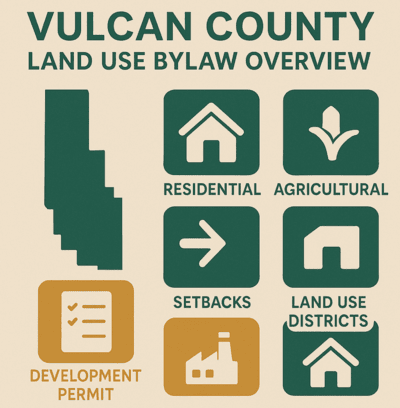
When purchasing property in Vulcan County, Alberta, understanding the land use regulations that apply to your specific parcel is essential before making an offer. The governing document is Vulcan County Land Use Bylaw No. 2020-028, most recently consolidated to Bylaw 2025-027 as of July 2025. Planning and development services in Vulcan County are administered through the Oldman River Regional Services Commission (ORRSC). This guide covers the key regulations buyers need to understand before purchasing rural, agricultural, or residential property in the county.
Always verify current regulations directly with Vulcan County Planning and Development before purchasing, as bylaws are amended regularly. Browse current listings at Vulcan County acreages for sale or search all Vulcan County real estate.
Overview: How the Land Use Bylaw Works
The Vulcan County Land Use Bylaw organises the county into land use districts, each with specific rules governing what can be built, how land can be used, and what activities are permitted or require approval. Every parcel of land in the county has a designated land use district, and buyers must understand what their target parcel's district allows before purchasing.
Development potential is determined by the land use designation or zoning of the parcel. If a proposed use is not listed within the applicable district, a Land Use Bylaw Amendment (rezoning) may be required before a development permit can be applied for. To find the land use designation for a specific parcel, use Vulcan County's online mapping system or contact the Planning and Development Department for assistance.
Planning applications in Vulcan County are administered by the Oldman River Regional Services Commission on behalf of the county. If you require assistance understanding the bylaw or your development options, contact ORRSC at (403) 329-1344 or visit orrsc.com.
Key Land Use Districts in Vulcan County
- Agricultural District (AG): The primary district for farming, ranching, and agricultural operations across the county. The majority of rural land in Vulcan County falls within this designation. Permitted uses include farm residences, agricultural buildings, and related operations. Non-agricultural uses typically require discretionary approval or rezoning.
- Country Residential District (CR): Intended for low-density rural residential development on larger parcels. Suited to buyers looking for a rural home without active agricultural operations.
- Commercial District (C): Areas designated for commercial businesses, retail, and services, typically located within or adjacent to Vulcan County's hamlets and villages including Vulcan, Champion, Carmangay, Lomond, Milo, and Arrowwood.
- Industrial District (I): For industrial activities including manufacturing, storage, and warehousing. Generally not suitable for residential use.
- Rural General District: Covers rural land uses that do not fit neatly within the agricultural or residential categories. Buyers should confirm permitted and discretionary uses for this district directly with the County.
- Rural Industrial District: For rural industrial operations, including energy facilities and large-scale industrial uses. This district has been the subject of recent Land Use Bylaw Amendment applications, including active rezoning proposals in 2026 for large-scale data processing and industrial development.
- Direct Control District (DC): A flexible district created for unique developments that do not fit standard categories. Each DC district has its own specific regulations set by Council.
Contact Vulcan County Planning and Development to confirm the land use district designation for any specific parcel before making an offer.
Permitted Uses and Discretionary Uses
Within each land use district, uses are classified as either permitted or discretionary:
- Permitted Uses: Allowed as of right provided all development standards of the district are met. The Development Officer has authority to approve a development permit for a permitted use without referral to the Municipal Planning Commission.
- Discretionary Uses: Require review and approval from the Vulcan County Municipal Planning Commission (MPC). If a proposed use is discretionary, the application must be advertised and adjacent landowners are notified. The MPC considers the application and makes a decision. Both the applicant and anyone affected by the decision may appeal the outcome during the appeal period.
If a proposed use is not listed as permitted or discretionary within the applicable land use district, a Land Use Bylaw Amendment (rezoning application) is required. This is a more involved process requiring a public hearing before Council. Confirm whether your intended use is permitted, discretionary, or requires rezoning with Vulcan County Planning before purchasing.
Development Permits: What Requires One
Most construction, changes in use, and signs require a development permit in Vulcan County. This includes new buildings, additions, replacements, changes in use or intensity of a parcel, and excavation. Development undertaken before a development permit takes effect is illegal under the Land Use Bylaw.
Some smaller developments may be exempt from development permit requirements. The Development Permit application process involves:
- Confirming the land use district designation for your property and identifying whether your proposed use is permitted or discretionary.
- Contacting Vulcan County Planning and Development (or ORRSC) if you need assistance before submitting an application.
- Preparing required documentation including site plans, building designs, and any environmental assessments applicable to your project.
- Submitting the completed application to the Vulcan County Planning and Development Department for review.
- For permitted uses: the Development Officer has authority to approve the application. For discretionary uses: the application is forwarded to the MPC, adjacent landowners are notified, and an appeal period follows any decision.
Always confirm permit requirements with Vulcan County Planning and Development before starting any construction or land use change. Forms and permit requirements are available on the Vulcan County website.
Setbacks and Parcel Size Requirements
Setbacks define the minimum distance that structures must be placed from property lines, roads, and other features. Typical setbacks for residential properties in Vulcan County include:
- Residential buildings: Minimum front yard setback of 7.6 metres (25 feet), side yard setback of 3 metres (10 feet), and rear yard setback of 7.6 metres (25 feet).
- Accessory buildings: Typically reduced setbacks of 1.5 metres (5 feet) from the side and rear property lines, depending on the land use district.
- Road and highway setbacks: Properties adjacent to provincial highways or county roads may be subject to larger setbacks. Always verify highway setback requirements for any property adjacent to a numbered road.
Setback requirements vary by land use district. Always verify the specific setbacks for your parcel's district with Vulcan County Planning before purchasing or planning any construction.
Compliance Certificates
A Compliance Certificate in Vulcan County confirms that all buildings and structures on a property comply with the current Land Use Bylaw. It is typically required by lending agencies and lawyers during the sale of property and for mortgage approvals. The certificate is based on a Real Property Report (RPR) prepared by an Alberta Land Surveyor.
Buyers should request a Compliance Certificate as part of their purchase due diligence. If the property does not comply with the Land Use Bylaw, corrective action may be required before a certificate can be issued. This could include removing or relocating structures, obtaining retroactive permits, or removing structures from easements or rights-of-way. Confirm the compliance status of any property before making an offer.
Non-Conforming Uses
A non-conforming use is a property or activity that was legally established under a previous version of the Land Use Bylaw but does not comply with current regulations. Non-conforming uses may continue but are restricted: they cannot be expanded or intensified, and significant changes or renovations will require compliance with the updated bylaw. Purchasing a property with a non-conforming use does not automatically transfer the right to continue or expand that use. Confirm the status of any non-conforming use with Vulcan County Planning before purchasing.
Overlay Districts and Environmental Considerations
Certain areas within Vulcan County are subject to overlay districts that impose additional regulations on top of the base land use district rules. These typically address flood risk, environmental protection, and other special circumstances.
Vulcan County is home to several significant water bodies including the Little Bow Reservoir and Travers Reservoir. Properties near these water bodies and other watercourses may be subject to flood hazard overlay requirements and additional environmental assessments before development can proceed. Always verify whether your target property falls within an overlay district before making an offer or planning any development.
Recent Amendments and Current Bylaw Status
The Vulcan County Land Use Bylaw No. 2020-028 has been amended multiple times since adoption. Key recent activity includes:
- Bylaw 2025-008 (May 2025): Land Use Bylaw amendment adopted at the May 21, 2025 Council meeting and consolidated into the bylaw.
- Bylaw 2025-027 (July 2025): The most recent consolidation of the Land Use Bylaw, incorporating all amendments to that date.
- Bylaw 2026-007 (Public Hearing April 1, 2026): An active application to redesignate approximately 850 acres from Rural General to Rural Industrial in support of potential large-scale industrial development. This public hearing is relevant to buyers considering rural land in the affected areas of the county.
Always verify the current consolidated version of the bylaw with Vulcan County Planning and Development before making any purchase or development decisions.
Due Diligence Checklist Before You Make an Offer
Buyers should complete the following checks before making any offer on a Vulcan County property:
- Confirm the land use district designation for the specific parcel
- Review permitted and discretionary uses for that district
- Verify setback requirements and whether all existing structures comply
- Request a Real Property Report and Compliance Certificate from the seller
- Check for overlay districts, flood zones, or environmental designations
- Confirm development permit requirements for any planned construction or changes
- Verify road access and whether any highway setback rules apply
- Confirm subdivision feasibility if that is part of your purchase rationale
- Check for any active Land Use Bylaw Amendment applications affecting nearby lands
See also the rural real estate FAQ, the septic and well inspection checklist, the well water guide for Alberta acreage buyers, and the how to buy an acreage guide.
Vulcan County Property Search
Browse current listings across Vulcan County and surrounding southern Alberta:
- Vulcan County Acreages for Sale
- Luxury Acreages in Vulcan County
- Vulcan County Homes for Sale
- Homes for Sale in Vulcan
- Land for Sale in Vulcan County
- Vulcan County Villages and Hamlets Real Estate
- Farms for Sale in Southern Alberta
- Farms for Sale Across Alberta
- Horse Ranches Across Alberta
- Southern Alberta Acreages
- Vulcan County School Districts Guide
- Vulcan County Parks and Recreation Guide
- Interactive Map Search
- Vulcan County Planning and Development (Official)
Frequently Asked Questions: Vulcan County Land Use Bylaw
What is the current Land Use Bylaw for Vulcan County?
The current bylaw is No. 2020-028, most recently consolidated to Bylaw 2025-027 as of July 2025. Planning is administered by the Oldman River Regional Services Commission (ORRSC). Always verify the current version with Vulcan County Planning before making any development decisions.
What are the main zoning districts in Vulcan County?
Agricultural (AG), Country Residential (CR), Commercial (C), Industrial (I), Rural General, Rural Industrial, and Direct Control (DC). Confirm your specific parcel's designation using Vulcan County's online mapping system or by contacting the Planning Department.
Do I need a development permit for all construction?
Most construction and changes in use require a development permit. For permitted uses, the Development Officer can approve the application. For discretionary uses, the application is forwarded to the MPC with adjacent landowner notification and an appeal period. Confirm your specific situation with Vulcan County Planning before starting any work.
What is a Compliance Certificate and do I need one?
A Compliance Certificate confirms that all buildings and structures on a property comply with the Land Use Bylaw, based on a Real Property Report from an Alberta Land Surveyor. Lending agencies and lawyers typically require it during a property sale or mortgage approval. Request one from the seller as a condition of purchase.
Are there lakefront properties in Vulcan County?
Yes. Vulcan County has several reservoirs including Little Bow and Travers. Lakefront and lakeshore properties may be subject to additional overlay regulations. Always confirm overlay status with Vulcan County Planning before purchasing any property near water features.
Where can I find a Vulcan County real estate agent?
Contact Diane Richardson at 403-397-3706 for guidance on buying property in Vulcan County. She has over 15 years of experience with rural acreage and farm purchases across southern Alberta.

About Diane Richardson
Diane Richardson is a licensed real estate agent with CIR Realty and has been helping buyers and sellers across rural southern Alberta for over 15 years. She brings practical knowledge of land use bylaws, rural due diligence, and the buying process to every transaction. Contact Diane at 403-397-3706 or diane@mypadcalgary.com. Read client reviews on the testimonials page.
Last updated: March 2026. Land use regulations change. Always verify current requirements directly with Vulcan County before making any purchase or development decisions. Source: Vulcan County Land Use Bylaw No. 2020-028 (consolidated to Bylaw 2025-027, July 2025).

CIR REALTY
Office
703 64 Ave SE #130
Calgary, AB, T2H 2C3