RSS

Rural Foothills County Homes for Sale: Bungalows, Estates and Country Homes Explained
Buyer's Guide · Rural Foothills County Homes

Rural Foothills County Homes for Sale:
The Home-First Buyer's Guide to Living in Foothills County

By Diane Richardson · Alberta Town & Country · CIR Realty · 2026

Browse all current listings:  Rural Foothills County Homes for Sale

There is a specific kind of buyer who searches for rural Foothills County homes for sale, and they are not the same buyer who is searching for raw acreage land.

They want a real home. A house that is already built, already liveable, and ideally already loved. A place with space around it: pasture, trees, a garden, room for animals. But one where the home itself is the starting point, not an afterthought to the land. They are moving from Calgary or Okotoks because they want more: more square footage, more privacy, more morning light and evening quiet. They are not building from scratch. They are finding a rural home that someone else built well, and making it their own.

If that describes you, this guide is written for you. Here is everything you need to know about rural Foothills County homes for sale: the communities, the home types, what to look for during due diligence, and how to find the right property for your situation.

"The buyers who thrive in rural Foothills County are home-first people. They want space around them, but they want to come home to something exceptional. The county delivers that in a way very few markets in Alberta can match."

What a Rural Foothills County Home Actually Looks Like

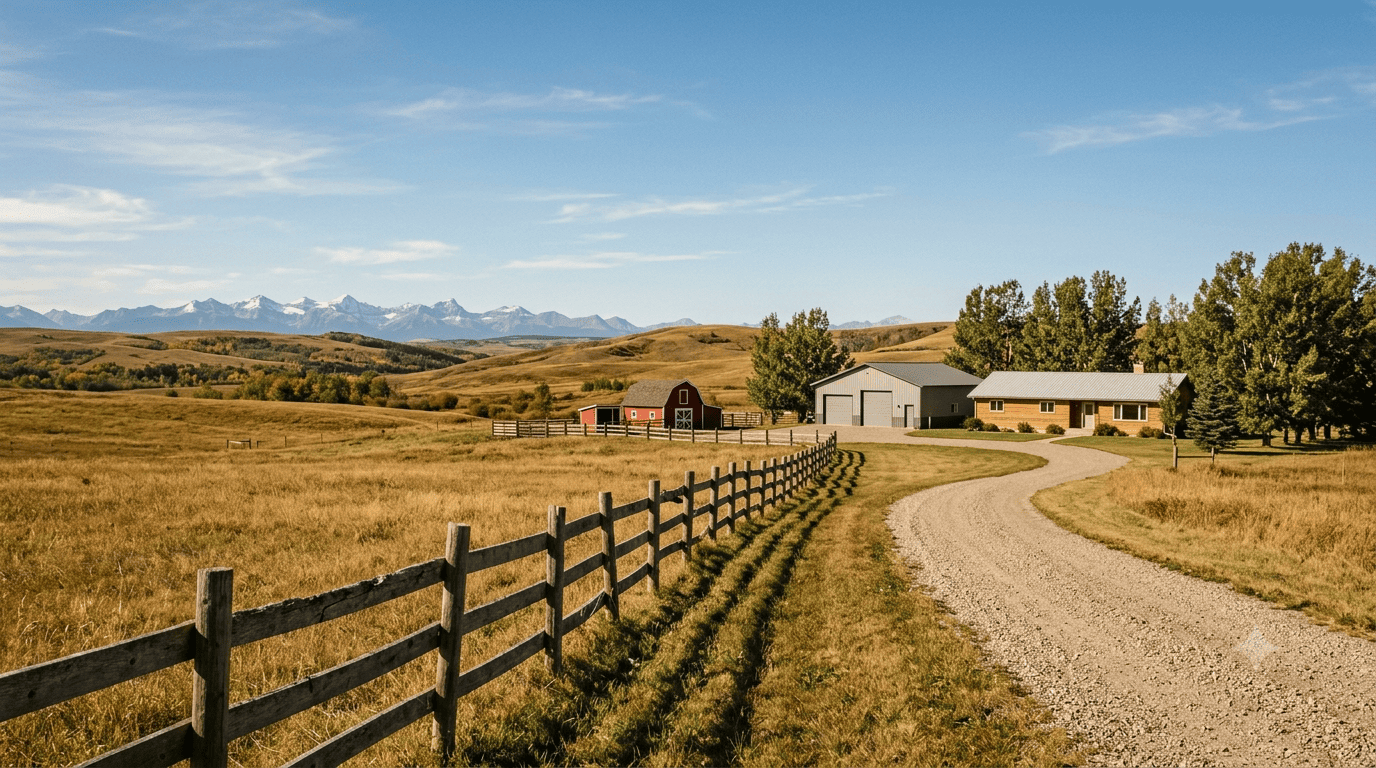
Rural Foothills County homes cover a remarkable range. At one end are the modest country homes on five to ten-acre parcels, practical and well-maintained, with older construction updated over decades of ownership. At the other end are custom-built estate homes with triple garages, heated shops, professional landscaping, and views that look like they were designed by an artist rather than shaped by geology.

What they share is the setting. Every rural home in Foothills County sits within the county's distinctive landscape: rolling foothills terrain, big skies, Rocky Mountain views to the west, and the kind of natural quiet that you simply cannot manufacture in a subdivision. The Foothills County real estate page gives a full picture of what is currently available across all property types, and the complete Foothills County MLS® listings are updated daily as new homes come to market.


Home Types in Rural Foothills County

Understanding what types of homes are available helps buyers focus their search. Here is how the rural Foothills County home market breaks down by property style:

Bungalows on Acreage

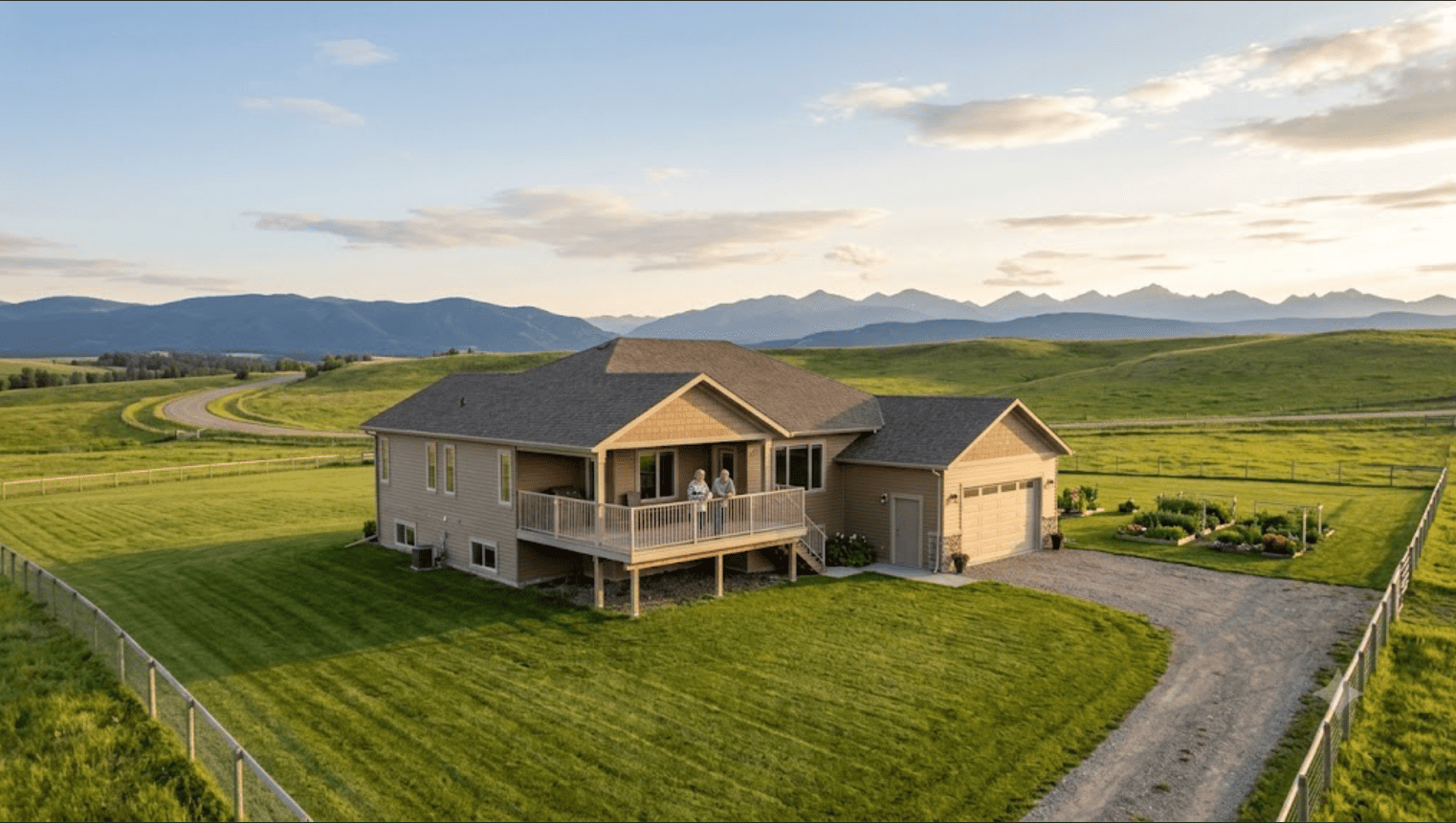
One of the most sought-after home types in the rural Foothills market. Single-level living with land around it appeals strongly to downsizers from Calgary, retirees who want to age in place, and buyers who simply prefer the open-plan character of a well-built bungalow. Browse all Foothills County bungalows for sale for the full selection.

Two-Storey Country Homes

Families consistently gravitate toward two-storey rural homes that offer separation between living and sleeping areas, room for children to grow, and the kind of square footage that simply does not exist at the same price point in Calgary. Rural Foothills County two-storey homes often include large mudrooms, oversized garages, and outbuildings as standard features of the property.

Walkout Basement Homes

The rolling terrain of Foothills County creates natural opportunities for walkout basement designs that take full advantage of the landscape. These homes typically offer spectacular views from the main living level, direct lower-level access to patios and yard space, and the option of a fully legal suite or recreation space below. Particularly popular in communities with elevation variation like Priddis and the Millarville area.

Luxury and Estate Homes

At the premium end of the market, Foothills County delivers estate-calibre homes that would be significantly more expensive in any comparable setting closer to Calgary. Custom construction, architect-designed layouts, premium finishes, and often full equestrian infrastructure alongside the home. Browse Foothills County luxury homes and luxury acreages in Foothills County for the upper tier of the market.

Country Homes with Horse Facilities

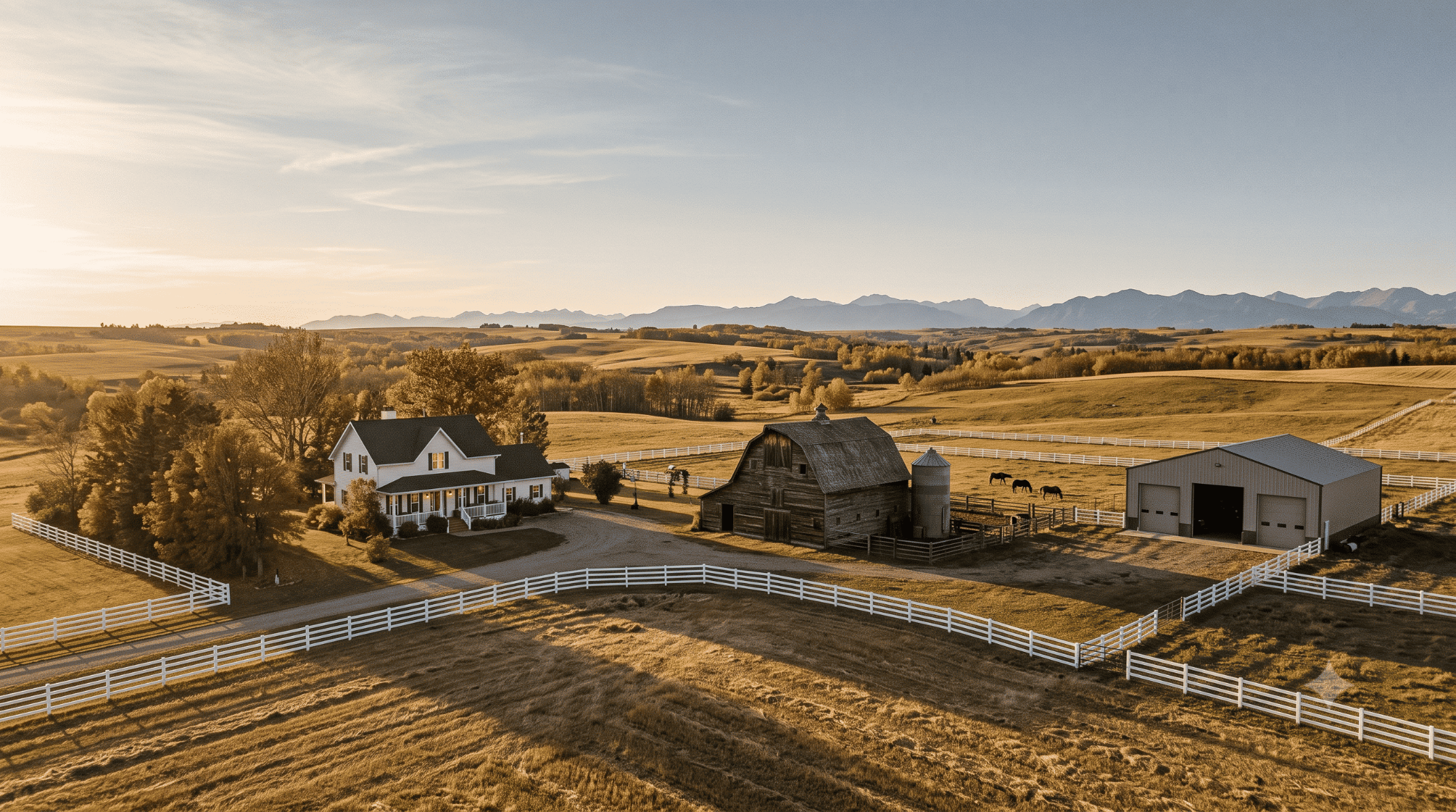
A significant portion of rural Foothills County homes include existing horse infrastructure alongside the house: stalls, paddocks, arenas, tack rooms, and hay storage. These are complete lifestyle packages that take years to build correctly. For buyers with horses, purchasing an established equestrian property is almost always preferable to building from scratch. See all horse properties in Foothills County.


Where to Look: Foothills County Communities for Home Buyers

The right community depends on how far you are willing to commute, how much land you want around you, and what kind of neighbours you want within reach. Here is how the main Foothills County communities compare for home buyers specifically:

Heritage Pointe

Just minutes south of Calgary's city limit, Heritage Pointe offers rural estate living with the shortest possible commute. Larger lots, executive homes, and a golf course community feel. One of the most practical choices for buyers who need to remain close to the city.

Browse Heritage Pointe homes →

De Winton

Rural acreage homes at the southern edge of Calgary's influence. De Winton properties offer genuine land, genuine quiet, and a commute that works for most Calgary professionals. The most popular entry point into Foothills County for Calgary families making their first rural move.

Browse De Winton homes →

Millarville

The most coveted address in Foothills County. Rural homes here tend to be well-established, often larger than average, and surrounded by the kind of community that draws buyers back every time they consider leaving. High demand, lower turnover. When a home comes to market here, it moves.

Browse Millarville homes →

Priddis

Tucked into the foothills west of the city, Priddis homes offer a secluded, private character that buyers who have lived there describe as transformative. Properties tend to have significant tree cover, larger parcels, and that rare sense of genuine separation from city life.

Browse Priddis homes →

High River Area

Rural homes surrounding High River offer excellent value and access to one of the best small-town downtowns in southern Alberta. Buyers who want a full community within a short drive of their rural property consistently end up in this corridor. Also check High River bungalows for single-level options.

Browse homes near High River →

Diamond Valley

The Turner Valley and Black Diamond area, now Diamond Valley, sits at the southern gateway to the Kananaskis foothills. Rural homes here offer strong value and access to exceptional outdoor recreation. A growing community with genuine character that is attracting a new generation of rural buyers.

Browse Diamond Valley homes →

For buyers who want to explore the full range of smaller rural communities across the county, the Foothills County towns and villages guide is the best starting point. The interactive map search is also invaluable for exploring by location before committing to a specific community.


What Home Buyers Need to Check in Rural Foothills County

Buying a rural home in Foothills County involves a different due diligence process from buying a Calgary house. These are the areas that catch home-first buyers off guard most often.

1

The home's mechanical systems matter more in a rural setting

Rural homes rely on private systems that city buyers have never had to think about: private wells, septic systems, propane or natural gas heating, and sometimes generator backup. These all require specific inspections beyond a standard home inspection. A professional inspector with rural property experience is essential. The septic and well inspection checklist is the essential companion to any offer on a rural Foothills home.

2

Well water quality and flow rate need independent testing

Most rural Foothills County homes are supplied by private water wells. The seller's disclosure of water quality is a starting point, not a conclusion. Independent water testing for bacteria, hardness, minerals, and flow rate should be a condition of every rural home purchase in the county. The well water guide for Foothills County walks through exactly what to test for and what the results mean.

3

Outbuildings and shops need their own assessment

Many rural Foothills homes include barns, shops, and outbuildings that add significant value but also carry their own maintenance responsibilities. Age, construction quality, electrical panel capacity, insulation, and permit history all matter. If adding or improving a shop is part of your plan, the guide to building a shop in Foothills County outlines what the county requires in terms of permits and setbacks.

4

What you can and cannot do on the property needs verification

Zoning determines what is permitted on the land around the home: how many animals you can keep, whether a secondary suite is allowed, what kinds of businesses can operate from the property. What a previous owner did is not necessarily what you are entitled to do. Verify the current zoning and permitted uses through the county before your conditions expire. The Foothills County property regulations guide is the reference for this research.

5

School access for families needs address-specific confirmation

Families relocating from Calgary often assume that school bus service works the same way in rural Foothills County as it did in the city. It does not. Bus eligibility is tied to your specific land description, and catchment boundaries shift. Verify school transportation eligibility at the address level before finalising your purchase. The Foothills County school districts guide covers everything families need to know.


Who Rural Foothills County Homes Are Really For

The buyers who find their long-term home in rural Foothills County tend to share one quality: they were honest with themselves about what they were actually looking for before they started searching.

Calgary families who have outgrown their city home and want space for children, animals, and a life that happens outdoors as much as indoors are the backbone of this market. They want a house with bedrooms and a kitchen they love, not a building project. They want a yard that becomes a lifestyle. And they want to be close enough to the city that Friday evening hockey practice does not become an expedition.

Retiring couples from Calgary represent another strong buyer group. The appeal of downsizing into a well-built bungalow with a few acres, mountains visible from the kitchen window, and a community of neighbours who share the same values for how to live, that is a very specific dream, and Foothills County delivers it reliably. Browse all Foothills County bungalows and Heritage Pointe bungalows for single-level rural living options.

Buyers new to rural property ownership will find the rural real estate FAQ and the how to buy an acreage near Calgary guide essential reading before making their first offer. Use the mortgage calculator to establish a realistic budget and the Foothills County parks and recreation guide to understand the outdoor lifestyle that comes with living here.

Essential Resources for Rural Foothills County Home Buyers

 Rural Foothills County Homes for Sale

 Foothills County Bungalows for Sale

 Foothills County Luxury Homes

 Horse Properties in Foothills County

 Heritage Pointe Homes for Sale

 Heritage Pointe Bungalows for Sale

 Millarville Homes and Acreages

 Priddis Homes for Sale

 De Winton Homes for Sale

 Diamond Valley Homes for Sale

 High River Real Estate Listings

 Acreages for Sale in the MD of Foothills

 Foothills County Property Regulations and Zoning

 Building a Shop in Foothills County

 Foothills County School Districts Guide

 Foothills County Parks and Recreation Guide

 Well Water Guide for Foothills County

 Septic and Well Inspection Checklist

 How to Buy an Acreage Near Calgary

 Rural Real Estate FAQ

 Mortgage Calculator

 Interactive Map Search

Ready to Find Your Rural Foothills County Home?

Rural Foothills County home buyers tend to be the most decisive buyers I work with. They know what they want, they have usually been thinking about it for years, and once they find the right property they move with conviction. What they need is a clear picture of the market and someone who knows it well enough to save them from the ones that look right but are not.

I have been working with rural buyers across Foothills County for over 15 years. Call, text, or email anytime. I am happy to help you find your home here.

Find Your Rural Foothills County Home

Browse current MLS® listings, explore by community, or contact Diane directly to start your rural Foothills County home search.

Disclaimer: All information herein deemed reliable but not guaranteed. Real estate services provided by Diane Richardson, Alberta Town and Country. MLS® listing data sourced from Pillar 9™ MLS® System.
Copyright © 2026, Alberta Town and Country. All rights reserved.
403.397.3706  •  diane@mypadcalgary.com
Read

MD of Foothills Acreages: Millarville, Priddis, High River and Everything In Between
Buyer's Guide · MD of Foothills Acreages

Acreages for Sale in the MD of Foothills:
Alberta's Most Sought-After Rural County, Explained

By Diane Richardson · Alberta Town & Country · CIR Realty · 2026

Browse all current listings:  Acreages for Sale in the MD of Foothills, AB

Ask almost anyone who has seriously looked for rural land near Calgary where they would choose to live if price were no object, and most of them will say the same thing: Foothills County.

The Municipal District of Foothills, commonly referred to as the MD of Foothills or simply Foothills County, is the rural municipality that stretches south and southwest of Calgary, encompassing some of the most picturesque, authentic, and deeply coveted acreage land in all of Alberta. Millarville. Priddis. De Winton. Diamond Valley. High River. These are not just place names; they are destinations that buyers search for specifically because they represent something that is increasingly rare: genuine rural Alberta with Rocky Mountain views, close enough to Calgary to be practical.

This guide gives you everything you need to understand the acreages for sale in the MD of Foothills: the communities, the property types, the due diligence requirements, and who this market is really for.

"Foothills County is where serious acreage buyers go when they are ready to stop compromising. The land is real, the community is authentic, and the lifestyle it supports is one that buyers hold onto for a very long time."

What Makes the MD of Foothills Different From Every Other County Near Calgary

Foothills County has several characteristics that set it apart from the other rural municipalities surrounding Calgary. Understanding them helps buyers make a more informed decision about whether this is the right county for their situation.

The first is the land itself. Foothills County sits at the transition zone between the open prairie and the Rocky Mountain foothills, which gives it a topographical variety that you simply do not get in the counties further south or east. Properties can have rolling terrain, tree cover, creek access, natural shelter belts, and those sweeping eastward views toward the Rockies that define the visual character of this part of Alberta.

The second is the community culture. Foothills County has a well-established equestrian tradition, a strong hobby farming community, and a rural character that has been decades in the making. Buyers from Calgary who move here consistently describe a shift in the quality of their daily life that goes well beyond the property itself. The Foothills County real estate page gives you a full overview of what is available across the county at any given time. For buyers comparing Foothills with other options south of Calgary, the acreages south of Calgary search broadens your view.


The Communities of Foothills County: Where to Focus Your Search

Foothills County is a large and diverse municipality. Each of its communities has a distinct identity, and the right one for you depends on your commute tolerance, your lifestyle priorities, and the kind of land you are looking for.

Millarville

The most sought-after community in Foothills County for equestrian buyers and serious acreage seekers. Millarville has the famous Racetrack and Farmers' Market, an authentic ranching character, and some of the finest acreage land near Calgary. Demand consistently exceeds supply here.

Browse Millarville acreages →

Priddis

Nestled in the foothills west of Calgary, Priddis offers a quiet rural character and some of the most private and scenic acreage land in the county. Its proximity to the Elbow River corridor and the mountains makes it particularly popular with buyers who prioritise natural beauty and seclusion.

Browse Priddis real estate →

High River

A full-service town with one of the most beloved historic downtowns in southern Alberta. Acreages around High River attract buyers who want genuine rural land without sacrificing access to a real community with shops, restaurants, and services. Strong equestrian culture and Sheep River access.

Browse High River acreages →

De Winton

The closest Foothills County community to Calgary's southern edge, De Winton is the go-to area for buyers who need the shortest possible commute while still living on genuine rural land. Acreages here are highly competitive precisely because of their location advantage.

Browse De Winton acreages →

Diamond Valley

Formed from the amalgamation of Turner Valley and Black Diamond, Diamond Valley offers a growing community with strong local character and access to Foothills acreage land at more accessible price points. Well-placed for buyers who want the south Foothills corridor without Millarville prices.

Browse Diamond Valley real estate →

Okotoks Area

Acreages surrounding the town of Okotoks are among the most practical in Foothills County. Easy access to town services, strong school infrastructure, and a well-established rural community. Popular with families who want land within reach of full amenities.

Browse acreages near Okotoks →

For buyers who want to explore the full range of smaller hamlets and communities across the county, the Foothills County towns and villages page gives a complete picture. You can also search all rural Foothills County homes for sale or browse the full Foothills County MLS® listings to see all property types together.


What You Can Buy in the MD of Foothills

Foothills County has one of the most varied acreage markets in Alberta. Here is how the major property categories break down:

Horse Properties and Equestrian Acreages

Foothills County is the premier horse property county near Calgary. Properties with arenas, stalls, paddocks, and cross-fencing are common, and the zoning typically supports the number of horses serious buyers need. Browse all horse properties in Foothills County for dedicated equestrian listings.

Hobby Farms

Smaller working properties with outbuildings, garden space, and livestock capacity are well-represented across the county. Foothills County is one of the best hobby farm markets in Alberta for buyers who want productive land within reasonable reach of Calgary. See all hobby farms for sale near Calgary.

Luxury Acreages and Estate Properties

The upper end of the Foothills County market features genuinely impressive estate properties with custom homes, professional equestrian facilities, and dramatic landscape settings. Browse luxury acreages in Foothills County and the broader Foothills County luxury homes for the premium market.

Ranches and Larger Agricultural Holdings

Foothills County is genuine ranching country with a lineage that goes back generations. Working cattle operations, hay producers, and mixed agricultural properties are available for buyers with the experience and vision to steward them. See ranches for sale in the Alberta Foothills and Alberta horse ranches for larger operation listings.

Raw Land and Building Lots

For buyers who want to build their own acreage from the ground up, Foothills County offers raw land and development parcels at various sizes. Browse land for sale in Foothills County for current available parcels.


Five Things Every MD of Foothills Acreage Buyer Needs to Know

Buying in Foothills County is genuinely rewarding, but it comes with specific due diligence requirements that catch buyers off guard when they are not prepared. These five areas matter most.

1

Zoning and animal unit rules are property-specific

Foothills County's land-use bylaws govern exactly what you can keep on a given parcel, how many animals, what structures are permitted, and whether a home-based business is allowed. These rules vary by zoning district and parcel size. The Foothills County property regulations guide is the essential starting point before any offer, and if you are considering building a shop or additional structure, the guide to building a shop in Foothills County is equally important.

2

Well water quality and flow rate are non-negotiable inspections

Most Foothills County properties rely on private water wells. Flow rate, depth, and water quality all vary significantly across the county, and properties with livestock or irrigation needs require substantially more water than a residential home alone. The well water guide for Foothills County is specific to this region and essential reading. Pair it with the septic and well inspection checklist before your first showing.

3

Septic system capacity matters more than buyers expect

Properties with barns, wash bays, outdoor utility sinks, and animal facilities place significantly more demand on septic systems than a standard residential home. Many rural Foothills properties have septic systems that were sized for residential use only. Age, condition, and capacity all need careful inspection. The septic system 101 guide for Alberta acreage owners gives you the framework to ask the right questions.

4

School bus routes need address-level verification for families

Foothills School Division serves most of the county but bus eligibility is tied to your specific land description, not just the general community. Families should confirm current transportation eligibility before finalising a purchase. The Foothills County school districts guide covers catchment areas, bus routes, and school options across the county.

5

The buying process for rural properties is more complex than city real estate

Acreage purchases in Foothills County involve a longer and more detailed due diligence process than a typical Calgary home purchase. Well inspections, septic assessments, zoning verification, land title reviews, and outbuilding evaluations all form part of the standard conditions package. The how to buy an acreage near Calgary guide and the rural real estate FAQ are both worth reading before you make your first offer.


Who Foothills County Acreages Are Really For

The buyers who find their forever property in Foothills County are almost always the ones who knew what they were looking for before they started. They had a clear picture of their lifestyle, they were honest about their commute tolerance, and they chose a community and property type that matched how they actually intended to live.

Equestrian families have long been the backbone of this market. The combination of proper zoning, established horse community, riding trail access, and proximity to Calgary makes Foothills County the first choice for serious horse people in central Alberta. Browse all horse properties in Foothills County to see what the current market has to offer.

Families who want their children to grow up with space and animals are another major buyer group. The school system is well-regarded, the communities are safe and welcoming, and the quality of childhood that rural Foothills offers is something that parents consistently describe as one of the most meaningful decisions they ever made. The Foothills County parks and recreation guide gives a sense of what outdoor amenities are available across the county for families and outdoor enthusiasts alike. Use the mortgage calculator to ground your budget, and the interactive map search to explore properties by location before narrowing your focus.

Essential Resources for MD of Foothills Acreage Buyers

 Acreages for Sale in the MD of Foothills

 Luxury Acreages in Foothills County

 Horse Properties in Foothills County

 Ranches for Sale in the Alberta Foothills

 Land for Sale in Foothills County

 Acreages for Sale Near High River

 Acreages for Sale Near Okotoks

 Acreages for Sale South of Calgary

 Hobby Farms for Sale Near Calgary

 Foothills County Property Regulations and Zoning

 Building a Shop in Foothills County

 Foothills County School Districts Guide

 Foothills County Parks and Recreation Guide

 Well Water Guide for Foothills County

 Septic and Well Inspection Checklist

 Septic System 101 for Alberta Acreage Owners

 How to Buy an Acreage Near Calgary

 Rural Real Estate FAQ

 Mortgage Calculator

 Interactive Map Search

Ready to Find Your Foothills County Acreage?

The MD of Foothills is one of the most consistently rewarding markets I work in, and I have been helping buyers navigate it for over 15 years. The properties here are exceptional. The due diligence is manageable with the right guidance. And the buyers who find their place in Foothills County almost never leave.

Whether you are just beginning your search or you have been looking for months and are ready to get serious, I am here to help. Call, text, or email anytime. No pressure, just good local knowledge and honest guidance about what this market has to offer.

Find Your MD of Foothills Acreage

Browse current MLS® listings, explore by community, or contact Diane directly to discuss your Foothills County search.

Disclaimer: All information herein deemed reliable but not guaranteed. Real estate services provided by Diane Richardson, Alberta Town and Country. MLS® listing data sourced from Pillar 9™ MLS® System.
Copyright © 2026, Alberta Town and Country. All rights reserved.
403.397.3706  •  diane@mypadcalgary.com
Read

Acreages for Sale in Mountain View County, AB: What Every Buyer Needs to Know
Buyer's Guide · Mountain View County Acreages

Acreages for Sale in Mountain View County, AB:
Rocky Mountain Views, Horse Country and Exceptional Value

By Diane Richardson · Alberta Town & Country · CIR Realty · 2026

️ Browse all current listings:  Acreages for Sale in Mountain View County, AB

There is a stretch of Alberta that sits in a genuinely ideal position for rural buyers.

North and northwest of Calgary along the foothills corridor, Mountain View County offers everything serious acreage buyers want: Rocky Mountain views, productive land, a strong equestrian culture, and a price point that reflects its position on the highway rather than the quality of the properties. It is not as well-known as Rocky View County to the south, and for buyers who discover it, that is often exactly the point.

If you have been searching for acreages for sale in Mountain View County and want a clear picture of what this market offers, who it suits, and what to verify before you buy, this guide covers it all.

"Mountain View County is where serious acreage buyers go when they want Rocky View character at a price that reflects the drive north rather than the quality of the land."

What Makes Mountain View County Different

Mountain View County wraps around the western edge of Alberta's Highway 2 corridor between Calgary and Red Deer, stretching west into the foothills and east onto the open plains. Its county seat is Didsbury, and its largest communities include Carstairs, Olds, Sundre, Cremona, and Water Valley. Each of these towns has its own character, and together they form a county with more lifestyle variety than most buyers expect when they first start looking here.

The western portion of the county, toward Sundre and Water Valley, has the most pronounced foothills character. Properties here often have tree cover, rolling terrain, creek access, and those eastward-facing Rocky Mountain views that are among the most photographed landscapes in Alberta. The eastern portions of the county offer flatter, more agricultural land with strong productivity and excellent value. Buyers looking for acreages close to Highway 2 for commuting ease will find the communities of Carstairs, Didsbury, and Olds particularly well-positioned.

The county also has a well-established equestrian community. Horse properties, arena facilities, and riding trails are woven into the fabric of rural life here in a way that attracts serious horse people from across central Alberta. The equestrian properties in Mountain View County search is worth exploring specifically if that is your focus. For buyers with bigger budgets, there are also dedicated luxury acreages in Mountain View County available at the upper end of the market.


The Towns of Mountain View County: Where to Focus Your Search

Understanding the county's communities helps buyers decide which part of Mountain View County suits their lifestyle and commuting needs. Here is how the key towns compare:

Carstairs

The southernmost major community in the county, closest to Calgary and Airdrie. Strong commuter appeal with quick Highway 2 access. Acreages around Carstairs offer good value and a manageable commute for buyers who still need to get to the city regularly.

Browse Carstairs real estate →

Didsbury

The county seat with a well-established community feel. A good balance of town services and rural surroundings. Acreages around Didsbury attract buyers who want small-town roots with access to county land in every direction.

Browse Didsbury real estate →

Olds

Home to Olds College, one of Alberta's leading agricultural institutions. A full-service town with hospital, retail, and strong agricultural infrastructure. Acreages near Olds are popular with farm-focused buyers and those who value a complete small city within reach.

Browse Olds real estate →

Sundre

The gateway to the foothills and the Red Deer River valley. Acreages around Sundre offer the most pronounced mountain views in the county, significant tree cover, and a genuine foothills character. Popular with equestrian buyers and those seeking a more secluded rural lifestyle.

Browse Sundre real estate →

Cremona

A small, quiet community west of Carstairs with a loyal local following. Acreages in the Cremona area offer a true rural character at excellent value and are particularly well-suited to buyers looking for larger parcels without the Sundre distance from Calgary.

Browse Cremona real estate →

Water Valley

A beloved small community with an arts and nature-focused identity. Properties around Water Valley are highly sought-after for their scenery, privacy, and sense of community among like-minded rural buyers. One of the most characterful spots in the entire county.

Browse Water Valley real estate →

For buyers who want to explore all the smaller hamlets and villages across the county, the Mountain View County towns and villages page gives a full overview. You can also search all Mountain View County homes for sale if you want to include town properties alongside rural acreages in your search. For nearby acreage searches, the Innisfail acreages and acreages near Olds pages offer additional options just outside the county boundary.


Five Things Mountain View County Acreage Buyers Need to Know

Mountain View County acreage purchases share many of the same due diligence requirements as other rural Alberta counties, but there are specific considerations that buyers in this region encounter more frequently than elsewhere.

1

Zoning and animal unit rules vary across the county

Mountain View County has specific land-use bylaws governing what is permitted on agricultural and country residential parcels, including how many animals can be kept relative to parcel size. If horses, livestock, or small-scale farming are part of your vision, verify zoning compliance before any offer goes in. The Mountain View County land use bylaw guide is the essential reference for understanding what any property actually permits.

2

Well water quality and flow rate need specific verification

Water quality varies across Mountain View County, particularly in the foothills areas where iron, sulphur, and hardness levels can be elevated. Flow rate is equally important for properties planning to support livestock or irrigation. Verify both before conditions are removed. The well water guide for Alberta acreage buyers and the septic and well inspection checklist are non-negotiable starting points.

3

Septic system age and condition are critical

Many established acreages in Mountain View County have older septic systems that were installed to standards that have since been updated. Age, capacity, and condition need to be inspected carefully, particularly on properties that have changed hands infrequently. The septic system 101 guide for Alberta acreage owners gives you the language and framework to ask the right questions before removing conditions.

4

School bus routes for families need address-level verification

Mountain View County's school districts serve a wide geographic area, and bus eligibility is tied to your specific land description rather than a general community. Families should verify current transportation eligibility and school catchment before finalising a purchase. The Mountain View County school districts guide is the starting point for this research.

5

Road access and commute time need realistic assessment

Mountain View County covers a large geographic area, and commute times vary dramatically depending on where a property sits relative to Highway 2 and Calgary. Acreages near Carstairs or Didsbury offer meaningfully shorter drives than those near Sundre or Water Valley. Be honest about how often you need to be in Calgary and choose accordingly. The Mountain View County parks and recreation guide is also worth reviewing to understand what outdoor amenities are available close to your target area.


Who Mountain View County Acreages Are Really For

Mountain View County consistently attracts buyers who have done their homework. They have usually looked at Rocky View County first, appreciated what they saw, and then discovered that Mountain View County offers a comparable lifestyle at a significantly lower price per acre. The land quality is excellent, the views are genuine, and the rural character is authentic.

Equestrian buyers are particularly well-served here. The combination of suitable land, established horse community, and access to trail riding country around Sundre and the Red Deer River valley makes Mountain View County one of the best horse property markets in central Alberta. Browse all equestrian properties in Mountain View County to see what is currently available with the specific infrastructure serious horse people need.

Hobby farmers drawn to the county's agricultural tradition will find good soil, a supportive farming community, and practical access to agricultural suppliers and equipment dealers in Olds and Didsbury. Browse hobby farms for sale in Alberta for a broader view of that market. For buyers comparing Mountain View County with neighbouring markets, both central Alberta acreages and the full Mountain View County MLS® listings are worth reviewing. Use the mortgage calculator to keep your budget grounded as you compare properties.

Essential Resources for Mountain View County Acreage Buyers

 Acreages for Sale in Mountain View County

 Luxury Acreages in Mountain View County

 Equestrian Properties in Mountain View County

 Mountain View County Homes for Sale

 Mountain View County MLS® Listings

 Mountain View County Land for Sale

 Mountain View County Land Use Bylaw Guide

 Mountain View County School Districts Guide

 Mountain View County Parks and Recreation Guide

 Innisfail Acreages for Sale

 Acreages for Sale Near Olds, AB

 Central Alberta Acreages for Sale

 Well Water Guide for Alberta Acreage Buyers

 Septic & Well Inspection Checklist

 Septic System 101 for Alberta Acreage Owners

 Rural Real Estate FAQ

 Mortgage Calculator

 Interactive Map Search

Ready to Search Mountain View County Acreages?

Mountain View County is one of the most rewarding acreage markets in central Alberta for buyers who understand it. The land is genuine, the communities are established, the views are real, and the value is consistently better than comparable properties closer to Calgary. It rewards buyers who come prepared and are honest about what their lifestyle actually requires.

I have been working with rural buyers across central Alberta for over 15 years and I am happy to help you understand which part of the county suits your life, what to look for in due diligence, and how to approach this market with confidence. Call, text, or email anytime to start the conversation.

Find Your Mountain View County Acreage

Browse current MLS® listings, explore by town, or contact Diane directly to discuss what you are looking for in Mountain View County.

Disclaimer: All information herein deemed reliable but not guaranteed. Real estate services provided by Diane Richardson, Alberta Town and Country. MLS® listing data sourced from Pillar 9™ MLS® System.
Copyright © 2026, Alberta Town and Country. All rights reserved.
403.397.3706  •  diane@mypadcalgary.com
Read

Acreages for Sale Near Grande Prairie, AB: Northern Alberta's Best-Value Rural Market
Buyer's Guide · Grande Prairie Acreages

Acreages for Sale Near Grande Prairie, AB:
Northern Alberta's Most Underrated Rural Real Estate Market

By Diane Richardson · Alberta Town & Country · CIR Realty · 2026

Browse all current listings:  Acreages for Sale Near Grande Prairie, AB

Most acreage conversations in Alberta start south of Red Deer.

Rocky View County. Foothills County. The Cochrane corridor. These are the markets that dominate search results, real estate conversations, and buyer imagination. And for buyers within commuting distance of Calgary, that focus makes complete sense.

But buyers who are open to northern Alberta and take the time to explore acreages for sale near Grande Prairie consistently find something that surprises them. More land. More tree cover. More value per acre. And a city infrastructure that supports rural living in a way that smaller Alberta centres simply cannot match.

"Grande Prairie acreage buyers get something rare in Alberta: serious land, serious tree cover, and a fully functioning city right on their doorstep. That combination is harder to find than people realise."

Why Grande Prairie Acreages Are Worth Serious Consideration

Grande Prairie County sits in the Peace Country region of northwestern Alberta, roughly 450 kilometres northwest of Edmonton. It is a region with a distinct identity: boreal forest, productive agricultural land, a strong energy sector, and a city of nearly 70,000 people that serves as the commercial and service hub for a vast surrounding region.

For acreage buyers, that city infrastructure matters enormously. Grande Prairie has hospitals, post-secondary institutions, a full range of retail and commercial services, an active arts and recreation community, and an airport with direct connections to major Canadian cities. Buyers who want genuine rural land without sacrificing urban access find this combination compelling in a way that smaller northern Alberta centres cannot replicate.

The land itself is the other part of the story. Grande Prairie County acreages typically offer more tree coverage, more topographical variation, and more raw natural character than the open prairie acreages further south. Properties here can feel genuinely remote while sitting within a 20 or 30-minute drive of full city services. That is a lifestyle combination that is genuinely difficult to replicate in southern Alberta at any price point. If this is your first foray into rural Alberta real estate, the rural real estate FAQ provides a solid grounding in what acreage ownership actually involves.


What the Land Around Grande Prairie Actually Looks Like

Buyers who have spent their time searching southern Alberta acreages sometimes need a mental recalibration when they start looking north of Edmonton. The landscape around Grande Prairie is fundamentally different, and understanding those differences helps buyers make better decisions about what to look for.

Treed Boreal Acreages

Properties with mature tree coverage are among the most sought-after in the Grande Prairie region. Spruce, poplar, and mixed forest give these acreages natural privacy, windbreak protection, and a character that feels genuinely wild. Buyers who want that sense of being in the northern bush without giving up city access will find exceptional options here.

Agricultural Acreages

The Peace Country has some of the most productive agricultural land in northern Alberta. Cleared acreages suited to grain, hay, or mixed farming operations offer strong value for buyers with agricultural ambitions. The growing season is shorter than southern Alberta, but the soil quality in cleared Peace Country farmland is genuinely excellent.

Mixed Acreages

Many Grande Prairie County properties combine cleared pasture with treed sections, giving owners both productive land and natural privacy. This is often the most versatile option for buyers who want the flexibility to run animals, have a garden, and still feel surrounded by the northern landscape.

Recreational and Retreat Properties

The lakes, rivers, and Crown land surrounding Grande Prairie make acreage properties in the region attractive to recreational buyers. Hunting, fishing, and ATV access are part of the lifestyle fabric here in a way that southern Alberta simply cannot match. For buyers who want a property they actually use, this is a significant factor.

For buyers who want to compare Grande Prairie with other Alberta acreage markets, the all Alberta acreages for sale search gives the broadest possible view. The central Alberta acreages page is also worth exploring for buyers who want to compare northern and central markets side by side.


Five Things Grande Prairie Acreage Buyers Need to Verify

Northern Alberta acreage purchases introduce considerations that differ meaningfully from the Foothills and Calgary corridor markets. These five areas are where buyers most often get surprised.

1

Seasonal access and road conditions

Northern Alberta winters are more demanding than southern Alberta winters, and spring breakup on gravel secondary roads can be significantly more disruptive. Some properties that appear accessible year-round become very challenging in spring. Ask specifically about road maintenance responsibility, seasonal weight restrictions, and historical access conditions before making any offer.

2

Well water quality and depth

Water quality varies considerably across Grande Prairie County. Some areas have excellent well water while others have high mineral content that requires treatment systems. Depth requirements vary too. Get a full water quality report and flow rate assessment as a condition of any offer. The well water guide for Alberta acreage buyers and the septic and well inspection checklist are essential references.

3

Energy sector activity near the property

Grande Prairie County has significant oil and gas activity, and some rural properties are affected by nearby wellsites, pipelines, or industrial operations. This can affect everything from noise levels and traffic to surface rights agreements and environmental considerations. Ask the seller specifically about any mineral rights, surface leases, or energy infrastructure associated with the property before proceeding.

4

Septic system condition and capacity

As with any rural purchase in Alberta, septic system age, condition, and capacity need careful inspection. Northern Alberta's freeze-thaw cycles place additional stress on septic infrastructure compared to southern Alberta. The septic system 101 guide walks through everything you need to assess before removing conditions on any acreage purchase.

5

Heating systems and winterisation

Heating a northern Alberta acreage property is a more significant operational consideration than in the south. Natural gas availability, propane tank sizing, heating system age, and insulation quality all affect both comfort and operating costs. Ask specifically about average heating costs and verify the age and condition of all mechanical systems before any offer goes in.


Who Grande Prairie Acreages Are Really For

The Grande Prairie acreage market attracts a specific type of buyer, and the people who thrive here share some consistent characteristics. They want land that feels genuinely northern. They either work in the Grande Prairie region already or are relocating for employment. They value the combination of natural space and urban services above everything else. And they're honest with themselves about what northern Alberta winters actually require in terms of preparation and mindset.

Energy sector workers and their families make up a significant portion of the market. Tradespeople, engineers, and professionals who work in the Peace Country's oil and gas industry have long recognised that an acreage outside Grande Prairie offers a quality of life that urban living in the city simply cannot match. Farmers and hobby farmers looking for productive northern land are another strong buyer group, drawn by Peace Country soil quality and the opportunity to farm at a scale that would be financially impossible in southern Alberta. Browse farms for sale across Alberta to compare northern and southern options.

For buyers comparing the Grande Prairie market with other Alberta regions, the county acreages for sale page covers all major Alberta county acreage markets. Use the mortgage calculator to ground your budget before comparing properties across different counties and regions.

Ready to Explore Grande Prairie Acreages?

The Grande Prairie acreage market rewards buyers who come prepared. The properties here offer genuine value, genuine land, and a lifestyle that southern Alberta markets simply cannot replicate at the same price point. The due diligence requirements are specific to the region, but none of them are insurmountable with the right guidance.

I've been working with acreage buyers across Alberta for over 15 years, including buyers relocating to and from the Grande Prairie region. If you're serious about exploring what this market has to offer, I'm happy to help you understand the properties, navigate the due diligence, and find the right acreage for your situation. Reach out by call, text, or email to start the conversation.

Find Your Grande Prairie Acreage

Browse current MLS® listings, search the interactive map, or contact Diane directly to discuss what you're looking for in Grande Prairie County.

Disclaimer: All information herein deemed reliable but not guaranteed. Real estate services provided by Diane Richardson, Alberta Town and Country. MLS® listing data sourced from Pillar 9™ MLS® System.
Copyright © 2026, Alberta Town and Country. All rights reserved.
403.397.3706  •  diane@mypadcalgary.com
Read

Medicine Hat Acreages for Sale: Big Sky, Prairie Land and Exceptional Value
Buyer's Guide · Medicine Hat Acreages

Acreages for Sale Near Medicine Hat, AB:
Big Sky Country, Prairie Land, and the Life That Comes With It

By Diane Richardson · Alberta Town & Country · CIR Realty · 2026

Browse all current listings:  Acreages for Sale Near Medicine Hat, AB

Medicine Hat earns its nickname honestly.

The sunniest city in Canada, with more hours of annual sunshine than anywhere else in the country, sits in the South Saskatchewan River valley in southeastern Alberta, where the prairie sky opens wide and the coulees cut deep into red clay and sandstone. It is a landscape that feels nothing like the rest of Alberta. And for buyers searching for acreages for sale near Medicine Hat, that distinction is the whole point.

This part of Alberta offers something genuinely different from the Foothills corridors and Calgary commuter belts that dominate most acreage conversations. The land is dramatic in a quieter way. The values are exceptional. And the lifestyle is one that people who find it tend to hold onto for a very long time.

"The Medicine Hat acreage market offers some of the best value in southern Alberta: wide parcels, dramatic prairie landscapes, and a cost of living that consistently surprises buyers who've only looked north of Calgary."

Why Medicine Hat Acreages Are Worth a Serious Look

Most buyers who find their way to the Medicine Hat acreage market arrive one of two ways: they grew up in southeastern Alberta and are returning, or they stumbled across the listings while searching southern Alberta more broadly and were surprised by what their budget could buy.

Both groups tend to share the same reaction. The land is extraordinary. The coulees and river valley topography give properties near Medicine Hat a character you simply don't find in flatter prairie country. Acreages here can include dramatic elevation changes, native grassland, treed ravines, and sweeping views across country that looks like it belongs on a canvas. All of it at prices that reflect the distance from Calgary rather than the quality of the property.

Medicine Hat itself adds to the appeal. A city of roughly 65,000 people, it offers genuine urban amenities including hospitals, post-secondary education, a thriving arts community, excellent recreation facilities, and a historic downtown, without the congestion or cost of living that comes with Calgary. For buyers who want acreage land but don't want to sacrifice access to a real city, the Medicine Hat corridor is one of the most underappreciated options in the province. The rural real estate FAQ is a good starting point if you're new to buying acreage land in Alberta.


The Land Around Medicine Hat: What Buyers Are Actually Buying

Understanding the landscape around Medicine Hat helps buyers make better decisions about where to focus their search. The region sits at the intersection of two distinct land types, and properties vary considerably depending on which side of that line they fall.

Coulee and River Valley Acreages

Properties close to the South Saskatchewan River and its coulees offer dramatic topography, sheltered microclimates, and exceptional scenery. These are among the most visually striking acreages in all of southern Alberta, with native vegetation and wildlife that flat prairie land simply cannot match.

Open Prairie Acreages

Flatter agricultural land surrounding the city offers larger parcels, productive soil, and strong value for buyers focused on farming, grazing, or simply having significant land area. These properties tend to offer the best price-per-acre in the region and suit buyers with livestock or agricultural ambitions.

County of Newell Properties

The County of Newell to the northwest, centred on Brooks, is the closest major acreage corridor to Medicine Hat and broadens the search considerably. Irrigation country with productive land, a strong agricultural community, and excellent value. Browse County of Newell acreages to compare.

Acreages Near Brooks

For buyers who want acreage land between Medicine Hat and Calgary, the Brooks area offers an interesting middle point with good highway access and strong agricultural land character. See all acreages near Brooks, Alberta.

Buyers who want to cast a wider net across southeastern and southern Alberta can also explore all southern Alberta acreages or browse all Alberta acreages for sale for the broadest possible search. For buyers interested in southern Alberta land specifically, the southern Alberta land for sale page surfaces raw and agricultural parcels alongside residential acreages.


Five Things Every Medicine Hat Acreage Buyer Needs to Know

Buying acreage land in southeastern Alberta introduces a specific set of considerations that differ from purchases in the Foothills or the Calgary corridor. These are the five areas that matter most.

1

Wind is a significant factor in this part of Alberta

Southeastern Alberta experiences some of the strongest and most consistent wind in the province. This affects building design, heating costs, tree shelter belt value, and the livability of exposed hilltop properties. Look carefully at natural windbreaks, building orientation, and existing shelter belts when evaluating any acreage in this region. A property with good shelter is meaningfully different from one without.

2

Water access varies more than buyers expect

This is semi-arid country. Reliable water supply is one of the most important things to verify before any acreage purchase in the Medicine Hat region. Some properties have wells, others rely on dugouts, cisterns, or water co-operatives. Flow rate, water quality, and reliability across seasons all matter. The well water guide outlines what to ask, and the septic and well inspection checklist should be part of every offer package.

3

Zoning and agricultural designations differ from northern Alberta counties

The County of Newell, which governs most of the rural land surrounding Medicine Hat, has its own specific land-use bylaws. What's permitted for residential use, animal units, and secondary structures needs to be confirmed at the county level before any offer. The County of Newell land use bylaw guide is the starting point for understanding what any given parcel actually allows.

4

Septic systems and rural infrastructure need careful inspection

As with any rural purchase in Alberta, septic system condition, age, and capacity are critical due diligence items. The septic system 101 guide for Alberta acreage owners walks through everything you need to assess before removing conditions. Road access and gravel road maintenance are equally worth investigating, particularly for properties accessed via secondary roads.

5

Distance to services matters more than buyers initially realise

Medicine Hat city proper has excellent services, but rural properties further from town require more self-sufficiency in daily life. Factor driving distance into every decision, including school bus routes for families, access to medical care, and the time cost of grocery and supply runs. The southern Alberta contractors directory helps you understand what local tradespeople and services are available in your target area.


Who Medicine Hat Acreages Are Really For

The buyers who thrive in the Medicine Hat acreage market share a few common traits. They value genuine space over prestige corridors. They appreciate a landscape that doesn't look like every other part of Alberta. And they tend to be honest with themselves about the trade-offs that come with distance from major centres.

Retirees figure prominently in this market, drawn by the sunshine, the cost of living, and the opportunity to finally have the property size they always wanted. Remote workers who discovered during the pandemic that their commute was now a Wi-Fi connection have also found Medicine Hat acreages compelling in a way that wasn't possible before. Ranching and farming families who need larger parcels at practical prices have always been here, and equestrian buyers interested in equestrian properties in Newell County will find the land suitable for horses and riding.

If you're also exploring other parts of southern Alberta for comparison, the farms for sale in southern Alberta page and the county acreages for sale search give you a broader picture of what's available across the region. The mortgage calculator is worth using to establish a realistic budget before you start comparing properties across different counties.

Ready to Start Your Medicine Hat Acreage Search?

The Medicine Hat acreage market rewards buyers who take the time to understand it. The land is distinctive, the values are genuine, and the lifestyle it supports is one that's increasingly difficult to find anywhere else in Alberta at this price point. Whether you're relocating to the southeast, searching for recreational land, or building toward a rural retirement, the properties around Medicine Hat deserve a serious look.

I've been working with acreage buyers across southern Alberta for over 15 years, and I'm happy to help you understand the market, shortlist properties that match your vision, and navigate the due diligence that rural purchases require. Reach out by call, text, or email to start the conversation.

Find Your Medicine Hat Acreage

Browse current MLS® listings, search the interactive map, or contact Diane directly to discuss what you're looking for in southeastern Alberta.

Disclaimer: All information herein deemed reliable but not guaranteed. Real estate services provided by Diane Richardson, Alberta Town and Country. MLS® listing data sourced from Pillar 9™ MLS® System.
Copyright © 2026, Alberta Town and Country. All rights reserved.
403.397.3706  •  diane@mypadcalgary.com
Read

Southern Alberta Acreage Living: What Calgary Buyers Discover When They Drive South
Buyer's Guide · Southern Alberta Acreages

Southern Alberta Acreages for Sale:
More Land, More Sky, and the Life That Goes With It

By Diane Richardson · Alberta Town & Country · CIR Realty · 2026

Browse all current listings:  Southern Alberta Acreages for Sale

Drive south from Calgary on Highway 2 and something changes.

The city thins out, the sky opens up, and the land begins to assert itself in a way that feels genuinely different from the western corridors around Cochrane or the manicured acreages of Bearspaw. This is southern Alberta, the Foothills, the plains, the ranching country that stretches down toward Lethbridge and the American border, framed on the west by the Rockies and on the east by some of the most productive agricultural land in Canada.

For buyers who want more land, more space, and more of the authentic Alberta rural life without paying Rocky View County prices, southern Alberta acreages represent one of the best-value rural real estate markets in the province. This guide is designed to help you understand it,  the counties, the character, the lifestyle realities, and what to verify before you buy.

"Southern Alberta doesn't just give you more land — it gives you a different relationship with the land altogether. The buyers who thrive here are the ones who came for that, not just for the price."

Why Southern Alberta Is Different From the Rest of the Province

Buyers who come to southern Alberta from the Calgary acreage corridor sometimes need a moment to recalibrate. The land out here operates on a different scale. Properties that would be considered large near Springbank are average here. The communities are smaller, the pace is quieter, and the culture is rooted in a ranching heritage that goes back generations.

That's not a weakness, for the right buyer, it's exactly the point. Southern Alberta attracts people who want a genuine rural lifestyle rather than a rural aesthetic. Ranchers, farmers, equestrian families, retirees looking for land, remote workers who've realised their commute is now a Wi-Fi connection, these are the buyers who find what they're looking for here, often at prices that would be impossible north of High River.

The trade-off is real: longer drives to Calgary services, more variable road conditions, and infrastructure that requires more self-sufficiency than buyers closer to the city might be accustomed to. If that trade-off suits your life, you'll find exceptional value. The rural real estate FAQ is a good place to ground yourself on what rural property ownership actually involves before you start browsing.


The Key Counties — and What Each One Offers

Southern Alberta spans several distinct rural municipalities, each with its own character, price range, and lifestyle profile. Here's how they break down for acreage buyers:

Foothills County

The northern gateway to southern Alberta acreage country. High River, Millarville, Priddis, Diamond Valley, and De Winton offer authentic Foothills character at prices below Rocky View. The closest true southern acreage corridor to Calgary.

Browse Foothills County acreages →

Wheatland County

Southeast of Calgary along the Trans-Canada — Strathmore, Drumheller corridor. Flat to gently rolling terrain, excellent agricultural land, and strong value for the dollar. A practical choice for buyers who want working land east of the city.

Browse Wheatland County acreages →

Vulcan County

South of Calgary between the Foothills and the prairies. Lower profile but exceptional value — large parcels, agricultural zoning, and some of the most affordable acreage land within two hours of Calgary. Ideal for buyers prioritising size and price over proximity.

Browse Vulcan County acreages →

MD of Willow Creek No. 26

Claresholm and surrounding area — a quiet, underrated acreage corridor with strong ranching character. Excellent value, productive land, and a genuine small-town community that buyers from the city often find surprisingly appealing.

Browse MD of Willow Creek acreages →

Pincher Creek

Southwest Alberta at the foot of the Rockies — dramatic scenery, strong ranching heritage, and a lifestyle that's genuinely off the beaten path. Further from Calgary but offers a level of landscape beauty and property value that's hard to match anywhere in the province.

Browse Pincher Creek acreages →

County of Newell

Southeast Alberta centred on Brooks. Irrigation country — some of the most productive agricultural land in Alberta, with a strong farming community and large parcels available at prices that reflect the distance from Calgary rather than the quality of the land.

Browse County of Newell acreages →

For buyers focused on the Foothills corridor specifically, the most-searched communities are High River, Millarville, Priddis, and Diamond Valley. If you're specifically looking for farms and ranching operations, both farms for sale in southern Alberta and ranches for sale in the Alberta Foothills are dedicated searches worth exploring. You can also browse southern Alberta land for sale for raw land and development parcels.


Five Things Southern Alberta Buyers Need to Know

Buying an acreage further south introduces considerations that don't always come up in the Calgary corridor conversations. These five areas catch buyers off guard most often.

1

Wind and weather are a factor, not a footnote

Southern Alberta has some of the strongest Chinook winds in Canada. In Pincher Creek and the Foothills corridor west of Claresholm, wind can be relentless in certain seasons. This affects building orientation, outbuilding anchoring, tree cover value, and heating costs in ways that buyers from Calgary's sheltered suburbs don't always anticipate. Spend time on the property in different seasons before committing if you can.

2

Water supply varies significantly by location

Southern Alberta's water table is less reliable than the Foothills counties north of High River. Well depth, flow rate, and water quality need careful verification — especially in drier eastern areas. Some properties rely on dugouts, cisterns, or water co-ops rather than wells. The well water guide for Foothills County and the septic and well inspection checklist are essential reading regardless of which county you're buying in.

3

Zoning and land-use bylaws differ county to county

What's permitted in Foothills County isn't automatically permitted in Vulcan County or MD of Willow Creek. Animal unit allowances, subdivision rules, and permitted uses vary significantly. The Foothills County property regulations guide and the MD of Willow Creek land use bylaw guide are county-specific references worth reviewing before you search in those areas.

4

School and service infrastructure matters more at distance

For families with school-age children, the further south you go, the more carefully you need to research school bus routes, catchment areas, and proximity to town services. The Foothills County school districts guide covers the northern part of the southern corridor, and the southern Alberta contractors directory helps you understand what local services and tradespeople are available in your target area.

5

Septic systems and road access — same rules, higher stakes

All the rural due diligence principles that apply near Calgary apply further south — and the consequences of getting them wrong are amplified by distance. Septic system condition, road access in spring breakup, and property boundary verification are non-negotiable inspections. Review the septic system 101 guide before any offer, and factor driving distance into every decision you make.


Who Southern Alberta Acreages Are Really For

In 15+ years of working with rural buyers across Alberta, the buyers who find the most satisfaction in southern Alberta acreages tend to share a few characteristics. They wanted the lifestyle, not just the property. They were honest with themselves about commuting and services. And they chose a county based on how they actually intended to live, not just on what photographed well online.

Southern Alberta draws equestrian families looking for properties with room for horses and riding country that stretches to the horizon. You'll find dedicated searches for horse properties in Foothills County, equestrian properties in Wheatland County, and horse properties in MD of Willow Creek. For buyers interested in full ranching operations, ranches for sale in the Alberta Foothills and Alberta horse ranches surface larger working properties.

If you're exploring a broader search that includes both central and southern Alberta, the all Alberta acreages for sale search or the Alberta farms for sale listing page gives you the widest net. Use the mortgage calculator to stay grounded on budget as you explore, and review the how to buy an acreage near Calgary guide for a full walkthrough of the rural purchase process — the principles apply equally well further south.

Essential Resources for Southern Alberta Acreage Buyers

 Southern Alberta Acreages for Sale — Current MLS® Listings

 Acreages for Sale South of Calgary

 Foothills County Acreages for Sale

 Vulcan County Acreages for Sale

 MD of Willow Creek Acreages for Sale

 Pincher Creek Acreages for Sale

 Acreages for Sale Near High River

 Farms for Sale in Southern Alberta

 Ranches for Sale in the Alberta Foothills

 Alberta Horse Ranches for Sale

 Foothills County Property Regulations & Zoning

 MD of Willow Creek Land Use Bylaw Guide

 Septic & Well Inspection Checklist

 Septic System 101 for Alberta Acreage Owners

 Well Water Guide — Foothills County

 Southern Alberta Contractors Directory

 Rural Real Estate FAQ

 Interactive Map Search — Search by Location

Ready to Explore Southern Alberta?

The right southern Alberta acreage is out there, and for the buyer who comes prepared, this market consistently delivers more value, more land, and more of the authentic Alberta rural experience than anywhere closer to the city. The key is knowing which county suits your life, understanding what to inspect, and working with someone who knows this territory firsthand.

I've been working with rural buyers across Foothills County, Vulcan County, MD of Willow Creek, and the broader southern Alberta corridor for over 15 years. Whether you're just beginning to explore or you have a specific area in mind, I'd be glad to help you search smarter. Visit the testimonials page to hear from buyers who've made this journey, or reach out directly to start the conversation.

Find Your Southern Alberta Acreage

Browse current listings across all southern Alberta counties, search the interactive map, or contact Diane directly to discuss what you're looking for.

Disclaimer: All information herein deemed reliable but not guaranteed. Real estate services provided by Diane Richardson, Alberta Town and Country. MLS® listing data sourced from Pillar 9™ MLS® System.
Copyright © 2026, Alberta Town and Country. All rights reserved.
403.397.3706  •  diane@mypadcalgary.com
Read

Hobby Farms for Sale Near Calgary: What to Know Before You Buy
Buyer's Guide · Hobby Farms Near Calgary

Hobby Farms for Sale Near Calgary:
What You're Really Buying — and What to Check First

By Diane Richardson · Alberta Town & Country · CIR Realty · 2026

Browse all current listings:  Hobby Farms for Sale Near Calgary, AB

There's a moment most hobby farm buyers remember clearly.

Maybe it was standing in a grocery store, staring at a plastic-wrapped chicken and thinking: I could be raising these. Maybe it was a Saturday morning at the Millarville Farmers' Market, eating a tomato that actually tasted like a tomato, and realising how far your own food had drifted from anything real. Maybe it was just the slow accumulation of years in a suburb, watching a postage-stamp lawn, wanting more.

Whatever the moment was, you're here now, looking at hobby farms for sale near Calgary, trying to figure out how to turn that feeling into a practical decision. This guide is designed to help you do exactly that and to make sure you ask the right questions before you fall in love with the wrong property.

"A hobby farm is not just a property purchase. It's a decision about how you want to spend your mornings, your weekends, and your energy for the next decade."

What Is a Hobby Farm — and Is That What You're Actually Looking For?

The term "hobby farm" gets used loosely in real estate, and that looseness causes real problems for buyers. In the Calgary region, a hobby farm typically means a rural property of 2 to 20 acres with some combination of cleared land, outbuildings, garden space, fencing, and the zoning to keep animals but not classified as a working commercial farm. It sits between a bare acreage and a full agricultural operation.

That distinction matters because what you're buying and what you need to verify is completely different depending on where on that spectrum the property actually sits. A 5-acre parcel in Foothills County with a small barn and a chicken coop is a very different purchase from a 15-acre parcel in Rocky View County with hay fields and an equipment shed even if both get listed under the same search term.

Before you search, get clear on what your vision actually requires: Are you growing vegetables for your family, or do you want a market garden? Are you keeping a few chickens and maybe a goat, or do you want horses? Do you need a shop for equipment and projects, or is a small barn sufficient? The answers determine your minimum parcel size, your zoning requirements, and your price range and they're all different. The rural real estate FAQ is a solid starting point for getting your head around these distinctions.


The Best Areas Near Calgary for Hobby Farms

Not all counties around Calgary support hobby farm lifestyles equally. Here's how the key corridors break down for this type of property:

Foothills County

The most authentic hobby farm country near Calgary. Millarville, Priddis, De Winton, and Diamond Valley offer excellent land quality, established rural community, and zoning that supports small-scale agriculture. Closest thing to "proper farming country" still within commuting distance of the city.

Browse Foothills County acreages →

Rocky View County

Excellent for hobby farmers who want proximity to Calgary and the Rockies. Springbank and the Cochrane corridor offer properties with strong infrastructure — power, gas, paved roads — but at a higher price per acre than Foothills.

Browse Rocky View County acreages →

Mountain View County

North and northwest of Calgary — Carstairs, Didsbury, Sundre. Offers some of the best value per acre for buyers who want working land, productive soil, and genuine agricultural character without Rocky View prices.

Browse Mountain View County acreages →

Wheatland County

East of Calgary along the Trans-Canada. Strong agricultural land, excellent for market gardeners and grain-adjacent hobby operations. More acreage for the dollar than the western or southern corridors.

Browse Wheatland County acreages →

For buyers specifically drawn to the Foothills area, Millarville and Priddis are the two communities that consistently attract serious hobby farmers both offer the right combination of land quality, community character, and proximity to Calgary. You can also broaden your search to include all farms for sale near Calgary or explore farms for sale in southern Alberta if you're open to a wider search radius.


Six Things to Verify Before You Make an Offer

Hobby farms have more moving parts than a standard acreage purchase. These are the six areas where buyers most often get surprised after the conditions are removed.

1

Zoning and animal unit allowances

Every county calculates "animal units" differently and ties the number of animals you can keep to parcel size and zoning class. If you want horses, pigs, goats, or even chickens at scale, you need the zoning verified before you buy, not after. The Foothills County property regulations guide and the Rocky View County purchasing guide are your starting points.

2

Water supply and well capacity

A family home needs perhaps 50 gallons per day. A hobby farm with a market garden, livestock, and irrigation can need ten times that. Well flow rate and water quality are non-negotiable due diligence items. The well water guide for Foothills County walks through exactly what to ask, and the septic and well inspection checklist should be in your hand on day one.

3

Soil quality and drainage

Not all Alberta acreage land grows things equally. Heavy clay soils in low-lying areas can be waterlogged in spring and cracked in August. Productive garden soil is genuinely different from decorative grass. If growing food is central to your vision, ask specifically about soil composition, drainage history, and whether the land has previously been used for cultivation.

4

Outbuilding condition and permits

Barns, chicken coops, greenhouses, and equipment sheds are a major part of the hobby farm value proposition, but many rural outbuildings were built without permits, haven't been inspected in decades, or were constructed with materials that don't meet current standards. Verify the condition and permit status of every structure before removing conditions. If you plan to build a new shop or structure, the guide to building a shop in Foothills County is an excellent resource.

5

Septic system capacity

Hobby farms often have additional wash-down areas, outdoor sinks, and livestock water management needs that place extra demand on septic systems sized for residential use only. An undersized or aging system is one of the most common and expensive — surprises for new hobby farm owners. The septic system 101 guide is required reading before any rural purchase.

6

Fencing and boundary condition

Listing photos never show fencing clearly. But fencing is expensive to replace a full perimeter fence on a 10-acre property can run tens of thousands of dollars. Walk every fence line. Check post condition, wire integrity, and whether the fence line matches the legal survey. If you're keeping livestock, the fencing determines what you can actually do with the land from day one.


The Honest Truth About the Hobby Farm Life

After 15+ years helping buyers find rural properties across Foothills County and Rocky View County, I've watched plenty of hobby farm dreams flourish.

Animals don't take weekends off. Gardens need attention in summer at exactly the time everyone wants to be somewhere else. Equipment breaks at the worst possible moment. The first Alberta winter on an acreage managing frozen water lines, keeping animals comfortable, clearing driveways in a serious snowfall is a genuine education in what rural life actually costs in time and energy.

None of this is a reason not to do it. The buyers I've worked with who made the transition thoughtfully who started with a property that matched where they actually were rather than where they hoped to be in five years are almost universally glad they did. The key is being honest about capacity before you're under contract, not after.

If you're also considering a property with horses or equestrian use, the Foothills County horse properties and Rocky View County equestrian properties searches will surface properties with the specific infrastructure arenas, stalls, paddocks that those animals require. Use the mortgage calculator to keep your budget grounded as you search, and review the acreage buying guide for a full walkthrough of the rural purchase process.

Ready to Start Looking?

The right hobby farm near Calgary exists but finding it takes knowing what to look for, which county to prioritise, and which questions to ask before you make an offer. That's exactly the kind of guidance I provide, grounded in over 15 years of working with rural buyers across Foothills County, Rocky View County, and the broader Calgary region.

Whether you're just beginning to explore or you've already been searching for months, I'd be glad to help you narrow down the options and get clear on what your vision actually requires. Visit the testimonials page to see how other buyers have navigated this process, or reach out directly to start the conversation.

Find Your Hobby Farm Near Calgary

Browse current listings, search the map, or contact me directly. I know this market — and I'd love to help you find the right property for the life you're building.

Disclaimer: All information herein deemed reliable but not guaranteed. Real estate services provided by Diane Richardson, Alberta Town and Country. MLS® listing data sourced from Pillar 9™ MLS® System.
Copyright © 2026, Alberta Town and Country. All rights reserved.
403.397.3706  •  diane@mypadcalgary.com
Read

Acreages for Sale Near Calgary: Which County Is Right for You?
Buyer's Guide · Calgary Region Acreages

Acreages for Sale Near Calgary:
Which County Is Right for You?

By Diane Richardson · Alberta Town & Country · CIR Realty · 2026

Browse all current listings:  Acreages for Sale Near Calgary, AB

Something shifted in how Calgarians think about home.

It happened quietly at first, a weekend drive west on Highway 1, a turn down a gravel road in Foothills County, a moment standing in a field watching the Rockies turn gold at dusk. Then it happened all at once: the city didn't feel like enough anymore.

If that sounds familiar, you're not alone. The market for acreages for sale near Calgary has never been more competitive, more diverse, or more misunderstood. Buyers arrive with a dream and leave confused, not because the right property doesn't exist, but because rural real estate plays by entirely different rules than anything they've bought before.

This guide is for those buyers. Whether you're eyeing a horse property in Rocky View County, a hobby farm near Millarville, or a private retreat somewhere along the Bow River valley, here is what 15+ years in this market has taught me. If you want a structured starting point, the how to buy an acreage near Calgary guide is worth reading first.

"Rural real estate plays by entirely different rules. The buyers who make the best decisions are the ones who understand which county fits their life, before they fall in love with a listing."

The Calgary Acreage Market Is Not One Market — It's Six

Most buyers search for "acreages near Calgary" as if it's a single category. It isn't. The land surrounding Calgary is divided into distinct rural municipalities, each with its own zoning rules, tax structures, utility options, and lifestyle character. The rural real estate FAQ is a useful primer if you're entirely new to the acreage buying process.

Rocky View County

Calgary's north and west corridor — Bearspaw, Springbank, Cochrane. Paved roads, natural gas, mountain views 20 minutes from downtown. The most sought-after county near Calgary.

Browse Rocky View acreages →

Foothills County

South and southwest — Millarville, Priddis, De Winton, Diamond Valley. Rawer land, quieter culture, more forgiving price points. Equestrian Alberta at its most authentic.

Browse Foothills acreages →

Wheatland County

East of Calgary along the Trans-Canada. More land for the dollar, agricultural strength, and genuine small-town character in communities like Strathmore and Langdon.

Browse Wheatland acreages →

Mountain View County

North and northwest — Carstairs, Didsbury, Sundre, Water Valley. Excellent for buyers prioritising acreage size and genuine rural quiet that's hard to find closer to the city.

Browse Mountain View acreages →

Kneehill County

Further north — Three Hills, Beiseker. Some of the best value-per-acre near Calgary for buyers prioritising land over proximity, with strong agricultural potential.

Browse Kneehill acreages →

Acreages South of Calgary

The broader Foothills corridor including High River, Okotoks, and beyond. Strong commuter routes, established rural communities, and excellent access to the Rockies.

Browse southern acreages →

For buyers searching near specific towns, dedicated searches are available for acreages near Cochrane, acreages near Okotoks, acreages near High River, and properties in Millarville.


The Five Questions Every Acreage Buyer Forgets to Ask

Buying a home in the city comes with a familiar checklist. Buying an acreage near Calgary requires a completely different one — and most buyers don't discover the gaps until they're already under contract.

1

Where does the water come from?

Most rural properties in Rocky View and Foothills counties rely on private water wells. Before you fall in love with a property, know the well's depth, flow rate, and water quality. The well water guide for Foothills County is essential reading, and the septic and well inspection checklist should be in hand before your first showing.

2

What does the zoning actually permit?

DC, Agricultural District, and Country Residential zoning each carry different rules about what you can build, how many animals you can keep, and whether you can operate a home business. Check the bylaw before the offer goes in, not after. Start with the Foothills County property regulations guide and the Rocky View County purchasing guide.

3

How does the septic system work?

Municipal sewer doesn't exist on rural properties. Age, condition, and capacity matter enormously. The septic system 101 guide for Alberta acreage owners walks through everything you need to know before committing to a property.

4

What are road conditions like year-round?

Gravel road maintenance varies dramatically between municipalities and even between road districts within a county. Ask specifically about spring breakup conditions. A stunning acreage at the end of a poorly maintained road becomes a very different property in April. The southern Alberta contractors directory helps you understand local service providers in your target area.

5

What is internet access like at that address?

Connectivity has improved with Starlink and regional fixed-wireless providers, but service quality is still address-specific. For families, school bus routing matters equally, the Rocky View County school districts guide and Foothills County school districts guide are indispensable for families making this move.


What the Right Acreage Actually Feels Like

The buyers I work with who make the best decisions are almost always the ones who get specific about how they actually want to live, not just what they want the property to look like on paper.

Are you looking for an equestrian property in Rocky View County with existing horse infrastructure, or building your barn setup from scratch? Are you drawn to a horse property in Foothills County where the ranching heritage runs deep? Or does a hobby farm near Calgary better match where you are in life right now?

Use the mortgage calculator to ground your budget before you fall in love with something, rural properties carry costs that city buyers don't always anticipate, from well maintenance to driveway grading to snow removal contracts. The full Calgary acreage guide walks through these decisions in detail if you want a structured framework before browsing.

Start Your Search Here

The acreage market near Calgary has something for nearly every version of the rural dream. Rocky View County offers prestige and proximity. Foothills County offers character and value. The counties further out offer space and quiet that money genuinely can't buy anywhere closer to the city. The trick is matching the right corridor to the right life, and that's exactly what I help buyers do.

I've spent over 15 years guiding buyers through this transition across Rocky View County, Foothills County, and the broader Calgary region. When you're ready to talk through what you've found, or what you haven't been able to find — I'm always available. You can read client experiences on the testimonials page to get a sense of how I work.

Ready to Find Your Place in the Country?

Browse current listings, search by map, or reach out directly. I know this market — and I'd love to help you navigate it.

Disclaimer: All information herein deemed reliable but not guaranteed. Real estate services provided by Diane Richardson, Alberta Town and Country. MLS® listing data sourced from Pillar 9™ MLS® System.
Copyright © 2026, Alberta Town and Country. All rights reserved.
403.397.3706  •  diane@mypadcalgary.com
Read

Millarville Equestrian Estate
When a Dream Property Actually Exists: The Millarville Equestrian Estate | Diane Richardson
Just Listed · Millarville, AB

When a Dream Property Actually Exists:
The Millarville Equestrian Estate You've Been Waiting For

By Diane Richardson · CIR Realty · March 2026 · MLS® A2291841

Most horse people have a version of the same vision. A place where the Rockies frame the horizon every morning, where your horses are steps from your door, and where the arena is so well-built you pinch yourself remembering it's actually yours. For years, that vision stays abstract — something you scroll toward late at night, refreshing MLS® pages, hoping.

This week, that vision became a real address. MLS® A2291841 at 210 274216 112 Street W in Millarville just hit the market — and in 15+ years of working with equestrian buyers across Foothills County, I can say without hesitation: this one is different.

"The Foothills equestrian market moves on its own timeline — quietly, decisively, and with very little fanfare. The buyers who end up owning properties like this are almost always the ones who moved quickly."

Millarville Is Not an Accident

There's a reason serious horse people come to Millarville and rarely leave. Tucked into the rolling hills of Foothills County, just south of the famous Millarville Racetrack and Farmers' Market, this community occupies one of those rare geographic sweet spots — close enough to Calgary for a practical commute, far enough away that you can hear the wind over the pasture instead of the Deerfoot.

The land here has a particular quality. The views toward the Continental Divide are unobstructed. The soil holds its footing. And the culture — quiet, unpretentious, deeply connected to the land — is one that equestrian buyers consistently describe as the reason they chose Foothills County over everywhere else.

This property sits squarely inside all of that.

What Makes This Facility Stand Apart

The heart of this estate is its equestrian infrastructure, and it is genuinely state-of-the-art. The indoor arena is built for serious riders — not as an afterthought, but as the centrepiece of the property.

Key Equestrian Features — MLS® A2291841

  • Equine-specific LED lighting — eliminates shadows and glare for rider and horse comfort
  • Waterless arena footing — consistent texture year-round, no dust in summer or mud in spring
  • Covered stable-to-arena passage — wide, connected access that transforms Alberta winters
  • Covered BBQ area at stable entrance — designed by people who actually live this lifestyle
  • Outdoor arena — dual-season versatility for training schedules that can't pause for weather
  • DC29 zoning — layered future residential potential rarely found in Foothills County
  • 37 listing photos — view the full gallery here
360° Virtual Tour — 274216 112 Street W, Millarville

Equine-specific LED lighting eliminates the shadows and glare that compromise both rider visibility and horse comfort. The footing is waterless — any competitive rider will immediately recognize that as a meaningful investment — meaning consistent texture year-round, no dust in summer, no mud in spring.

The stables connect directly to the indoor arena through wide, covered passages. That detail sounds small but transforms daily winter routines in Alberta. The covered BBQ area at the stable entrance tells you something about how this property was designed: by people who actually live this lifestyle, not developers who studied it from a distance.

See the Property in Motion

Acres of Trails
Outdoor Arena

The Land Itself

The DC29 zoning designation signals something important: this is a parcel with layered future potential. For buyers who want to own the land today and understand what flexibility tomorrow may bring, that detail is worth a conversation. Properties with this kind of zoning profile in Foothills County are genuinely rare, and they don't sit long.

Millarville's landscape at this location delivers what buyers drive out here hoping to find — rolling terrain, shelter belts, and those Rocky Mountain views that make the Foothills region one of the most sought-after rural corridors in Western Canada.

Who This Property Is For

This is not a starter acreage. This is a destination — built for the buyer who has been patient, who knows exactly what they need, and who is ready to stop compromising. Whether you are a competitive rider who needs proper infrastructure, a family raising horses as part of a rural lifestyle, or an investor who understands the value of purpose-built equestrian land in an area where supply is genuinely constrained, this property speaks directly to you.

It was listed on March 13, 2026. It has 37 photos. And I suspect it will not have many days on market.

Ready to See It in Person?

I represent this listing and know every detail. Call, text, or email me directly — no runaround, no waiting for a callback from someone who's never been on the property.

Disclaimer: All information herein deemed reliable but not guaranteed. Real estate services provided by Diane Richardson, Alberta Town and Country. MLS® listing data sourced from Pillar 9™ MLS® System.
Copyright © 2026, Alberta Town and Country. All rights reserved.
Read

Small Town Charm Around Calgary: Your Complete 2026 Guide to Community Living

Small Town Charm Around Calgary: Your 2026 Guide to Community Living

Foothills acreages, lakeside towns, mountain-view communities, and growing family suburbs — find the one that fits your life.

The communities around Calgary have grown into full-service destinations with their own schools, downtowns, recreation, and identities — while still sitting within 20 to 50 minutes of the city. Whether you want a half-acre lot in a master-planned suburb, a 10-acre horse property in the Foothills, lakeside living in Chestermere, or an artisan village in the foothills, the options within an hour of Calgary are genuinely diverse. This guide maps out what each area is actually like, what you'll typically pay, and where to start your search.

What Small Town Living Around Calgary Actually Delivers

The pitch for rural and small-town living is well known. The reality is more specific — and worth understanding before you choose a direction.

What You're Looking ForWhat These Communities DeliverReal-World Impact
More home for your money Larger lots, newer builds, lower price-per-square-foot than Calgary An extra bedroom, a double garage, or a shop that Calgary's budget simply won't allow
Genuine community feel Local events, active community associations, familiar faces at the school Kids walk to school; neighbours actually know each other
Nature access Mountains, river valleys, foothills, prairie — depending on direction you go Trail systems, fishing, equestrian land, kayaking — minutes from the front door
Practical commute 20–50 minutes via Highways 1, 2, 22, 22X, and 8; remote work cuts this further City career, rural pace — without giving up either
Space to build and expand Acreages, hobby farms, horse properties — land use bylaws that allow a shop, barn, or animals Room to grow without asking a strata council for permission

Foothills County — South of Calgary, Where Town Meets the Land

Foothills County stretches south of Calgary from DeWinton down through Okotoks, High River, Diamond Valley, and Nanton, with the foothills rising to the west. It covers the most sought-after rural communities in the Calgary region — acreage properties, horse farms, and genuine small towns, all within practical commute range. If you're buying south of the city, this is the territory to understand.

Okotoks

A genuine town of 34,000+ with a walkable historic Main Street, a strong school system (including Catholic and public options), and the Sheep River pathway network. Okotoks has grown substantially but has kept its character — it's a real destination, not a commuter suburb. New neighbourhoods like Wedderburn, D'Arcy Ranch, Drake Landing, Cimarron, Crystal Shores, and Sheep River Ridge give buyers a range of styles and price points.

Typical range: $400,000 – $1,400,000

High River

A characterful historic town with a genuine downtown, a thriving arts community, and the Highwood River running right through it. High River offers strong value relative to Okotoks and Calgary — established neighbourhoods, larger lots, and a loyal community that has rebuilt with remarkable resilience since 2013. About 45 minutes south of Calgary via Highway 2.

Typical range: $350,000 – $950,000

Diamond Valley

Formed from the amalgamation of Black Diamond and Turner Valley, Diamond Valley sits in the foothills with relaxed small-town character and close access to Kananaskis Country. Popular with outdoor enthusiasts, retirees, and buyers who want a genuine foothills lifestyle at a price point below Okotoks. The downtown retains the feel of old Turner Valley — unhurried and real.

Typical range: $350,000 – $800,000

Heritage Pointe

A prestigious golf-course community straddling the Calgary–Foothills County boundary — close enough to Fish Creek Park and south Calgary amenities to feel convenient, far enough to feel spacious. Executive homes on large lots, with a private, low-traffic feel that's hard to replicate closer to the city. Ideal for buyers who want space without fully leaving the city orbit.

Typical range: $700,000 – $2,000,000+

DeWinton & Millarville

Two of Foothills County's most sought-after rural pockets. DeWinton sits just south of Calgary's city limits with large acreages and some of the shortest commutes available outside the city. Millarville is known for its beloved Saturday farmers' market, local racetrack, and rolling foothills landscape — a true rural community with real identity.

Typical range: $700,000 – $3,500,000+

Priddis

One of Calgary's most private rural addresses — large acreage lots tucked into the foothills, many with treed sites, wildlife, and mountain views. Priddis attracts buyers who want genuine seclusion: quiet roads, very little through-traffic, and a community that values its privacy. Yet it's still only about 30 minutes from Calgary's southwest edge.

Typical range: $900,000 – $4,000,000+

Rocky View County — Calgary's Western and Northern Rural Ring

Rocky View County wraps around Calgary's north and west, containing some of the most prestigious rural addresses in the province alongside growing family communities to the east. The range here is wide — from Springbank's multi-million-dollar estates to Langdon's practical family lots — but the common thread is space, scenery, and proximity to the city.

Bearspaw

Just northwest of the city limits — private schools, equestrian estates, and large treed lots with mountain views. Bearspaw is one of the most sought-after rural addresses in the entire Calgary region. Properties here tend to stay in families for decades.

Typical range: $1,200,000 – $5,000,000+

Springbank

Luxury acreage estates west of Calgary with unobstructed mountain views and some of the shortest rural-to-city commutes available. Springbank properties range from executive hobby farms to architectural showpieces, often on 2–10 acre parcels.

Typical range: $1,500,000 – $8,000,000+

Elbow Valley

A gated master-planned community west of Calgary with a private lake, golf course, and executive homes. One of the few true gated communities in the region — residents value the security and the curated environment as much as the real estate itself.

Typical range: $1,000,000 – $4,000,000+

Bragg Creek

An artisan foothills village with a loyal community, Kananaskis access right at the door, and a mix of acreages and village properties. Popular with outdoor enthusiasts, remote workers, and buyers who want a truly distinct lifestyle. The West Bragg Creek trail network alone is a major draw.

Typical range: $600,000 – $2,500,000+

Harmony

A thoughtfully planned lakeside community west of Calgary, built around a private lake, golf, and a village commercial area. Harmony has established itself as one of the region's premier new communities — a genuine neighbourhood rather than just a subdivision.

Typical range: $700,000 – $2,500,000

Langdon & East Rocky View

Langdon is a small, family-oriented community east of Calgary with large lots and real value compared to the city's southeast. East Rocky View covers the broader rural communities in that corridor. Both areas attract buyers who want space on a more practical budget.

Typical range: $500,000 – $1,200,000

Airdrie, Cochrane, Chestermere & Crossfield — Growing Towns with Full Amenities

These four communities are the fastest-growing around Calgary — proper cities and towns with their own hospitals, schools, shopping, and recreation, but with pricing and space that Calgary can't match. If you want urban convenience at a non-urban price, this is the tier to focus on.

Airdrie

Alberta's fastest-growing city at over 85,000 residents, just north of Calgary on Highway 2. Master-planned communities, full amenities, and some of the most accessible pricing in the Calgary region. Strong choice for families wanting new construction without stretching the budget to its limit.

Typical range: $450,000 – $950,000

Cochrane

Sitting in the Bow River valley with the Rocky Mountains in view from almost every street, Cochrane has a genuine historic downtown, strong community character, and growing neighbourhoods to suit most budgets. Popular with buyers who want mountain access without Canmore's price tag.

Typical range: $450,000 – $1,500,000

Chestermere

Lakeside living just 20 minutes east of Calgary. Chestermere Lake is the centrepiece — boating, paddleboarding, and waterfront living within easy reach of the city. A genuinely unique lifestyle option at a price point well below comparable urban lakefront communities anywhere in Alberta.

Typical range: $550,000 – $2,000,000+

Crossfield

Often overlooked, Crossfield offers genuine small-town character north of Airdrie with a short Highway 2 drive to Calgary's amenities. Larger lots, lower entry pricing, and a real community feel — the kind of town where you actually know your neighbours. A strong value play for buyers priced out of Airdrie or Cochrane.

Typical range: $375,000 – $750,000

Mountain View County — North of Calgary, Agricultural Heart of the Foothills

Mountain View County covers the communities north and northwest of Calgary — Carstairs, Didsbury, Olds, Sundre, Cremona, and Water Valley among them. This is Alberta's agricultural heartland: grain farms, hobby farms, horse properties, and small towns with real character. Pricing is meaningfully lower than south or west of Calgary, and the land stretches wide.

Carstairs

Established small town with solid community infrastructure, a mix of bungalows and newer builds, and easy Highway 2 access. Bungalows →

Didsbury

A quiet, welcoming town with excellent value, strong community spirit, and a historic downtown that still has life in it.

Olds

Home to Olds College, a full-service town with hospital, shopping, and strong agricultural identity. Acreages →

Cremona

A small, quiet hamlet west of Carstairs with acreage properties and an unhurried pace — popular with buyers who value simplicity.

Sundre

Red Deer River valley community known for fishing, hunting, and serious outdoor recreation. A true rural lifestyle destination.

Water Valley

A beloved small community west of Carstairs — creek valley setting, tight-knit character, and a legendary local pub. Low inventory, high loyalty.

Wheatland County & Strathmore — East of Calgary, Wide Open and Affordable

Wheatland County and its hub community of Strathmore offer some of the best value per acre within practical Calgary commute range. East of the city, the land opens up to wide prairie, big sky, and genuine agricultural country. For buyers who can work remotely or commute part-time, this territory offers space that west-of-Calgary communities simply can't match at the same price.

Strathmore

A full-service town with hospital, schools, and real retail — the primary hub for Wheatland County. One of the few communities outside Calgary with genuine amenities at an entry price point that still leaves room in the budget.

Bungalows → Acreages →
Rural Wheatland Communities

Standard, Hussar, Gleichen, and surrounding hamlets offer acreage and farm properties at true value pricing — ideal for remote workers, hobby farmers, or buyers wanting to maximize land for the dollar.

Acreages → All Homes → Land →

Search by What You're Actually Looking For

Not sure which community yet? Search by property type first — sometimes the right listing finds you before the right town does.

Essential Guides for Acreage & Rural Buyers

Buying rural property is a fundamentally different process than buying in town. Wells, septic systems, land use bylaws, zoning, outbuildings, and acreage due diligence all require knowledge that doesn't apply to urban purchases. These guides cover the territory.

Diane Richardson - Rural and Acreage Real Estate Specialist

Your Rural & Small Town Specialist

Buying outside the city takes different knowledge — wells, septic systems, land use bylaws, acreage due diligence, and the kind of local insight that only comes from years working these specific communities. With over 15 years representing buyers and sellers across Foothills County, Rocky View County, Okotoks, High River, Cochrane, and the broader Calgary region, I can help you buy with confidence rather than guesswork.

403-397-3706  |  diane@mypadcalgary.com

Your Next Steps

  1. Pick your direction. South into Foothills County, west into Rocky View, north into Mountain View, or east into Wheatland — each has a distinct feel and price range. The community sections above are built to help you choose.
  2. Decide: town or acreage? Towns like Okotoks and Cochrane have their own draw. Acreages are a different commitment — well, septic, land use bylaws, and more land to manage. Read How to Buy an Acreage and the Rural Real Estate FAQ if you're leaning rural.
  3. Search visually. The map search tool lets you draw a search area and see what's available — often more useful than guessing at community names.
  4. Understand what you're buying. For acreages, read the well water guide, the septic guide, and use the inspection checklist before you make an offer. These are the issues that surprise unprepared buyers.
  5. Calculate what you can carry. Use the mortgage calculator and review Alberta's first-time buyer programs if they apply to your situation.
  6. Talk to someone who knows the territory. Contact Diane Richardson for current market insight, honest community comparisons, and property tours — without the sales pressure.

All information deemed reliable but not guaranteed. Price ranges reflect general 2026 market conditions and vary by property size, condition, and specific location. Zoning, land use, and bylaw details should always be verified directly with the relevant municipality before purchase. Last Updated: March 3, 2026.

Read

D’Arcy vs. Wedderburn: Which North Okotoks Community is Right for You?

D’Arcy vs. Wedderburn: Which North Okotoks Community is Right for You?

A Professional Side-by-Side Comparison of Alberta’s Premier Master-Planned Developments

So, you’ve decided that Okotoks is the place to be, and you’ve narrowed your search to the vibrant northern expansion. You’re likely standing at the intersection of Northridge Drive and 338 Avenue, looking at two of Alberta’s premier master-planned communities: D’Arcy and Wedderburn.

Both are developed by the award-winning Anthem United, both offer stunning mountain views, and both are connected by the town's impressive pathway system. However, despite their proximity, each community has a distinct personality. This 2026 guide will help you decide which one fits your specific lifestyle and budget.

1. The Vibe and Vision

D’Arcy: Designed with a "connectivity-first" philosophy. It feels like an established village centered around the D’Arcy Ranch Golf Club. It’s social, active, and focused on "linkage"—connecting people to nature and neighbors through an expansive amphitheater and ravine trails.

Wedderburn: While highly connected, Wedderburn offers a more modern, "boutique" feel. It is designed to be a "complete community," emphasizing family-centric living with a focus on future schools and proximity to the newest commercial hubs.

2. Amenities and Walkability

Both communities benefit from D’Arcy Crossing, the 150,000 sq. ft. shopping center. Whether you live in D'Arcy or Wedderburn, you are within walking distance of Safeway, Shoppers Drug Mart, Starbucks, and local dining.

  • D’Arcy’s Edge: Direct access to the golf club. If you’re a golfer, walking to the clubhouse is a lifestyle perk that’s hard to beat.
  • Wedderburn’s Edge: Proximity to the future high school site. For families looking at long-term school planning, Wedderburn is the "education hub" of the north.

3. Master Comparison: Features & Costs

FeatureD'ArcyWedderburn
Primary Lifestyle Active / Golf-centric Family / Growth-centric
Typical Entry Price (2026) $650k (Duplex) / $710k+ (Detached) $245k (Condo) / $780k+ (Detached)
Key Amenity D'Arcy Ranch Golf Club Future High School Site
Home Types Bungalows, Duplexes, Laned Homes Townhomes, Condos, Executive Estates
Lot Options Golf-course & Ravine backings Greenspace & Mountain views

Financial Nuances: What to Watch For

While both communities share the same 0.67% property tax rate, your total monthly carry may vary based on:

  • Homeowners Association (HOA) Fees: D'Arcy typically includes a modest HOA fee to maintain the amphitheater and enhanced landscaping. In Wedderburn, fees are generally specific to multi-family developments (townhomes/condos).
  • Landscaping Incentives: Builders in these areas often run seasonal promotions. Always ask Diane Richardson to verify current builder-specific incentives before signing.
  • The "Condo" Factor: Wedderburn currently offers a lower entry point via the Lawrie Park condo project, whereas D'Arcy's entry is geared more toward duplexes and detached homes.

The Verdict: How to Choose?

If you value being steps away from the green and a social, established community feel, D’Arcy is likely your winner. However, if you are a family looking for the latest modern architecture, future school proximity, or a lower entry point via a condo, Wedderburn offers an incredible opportunity to get in early on a master-planned masterpiece.

Expert Guidance from Diane Richardson

Choosing between these two isn't just about the house—it's about the lot orientation, the builder's reputation, and the architectural controls. With over 15 years of experience in Okotoks real estate, I provide independent representation to ensure you find the right fit.

Contact Diane for a Community Tour

Browse the latest: Okotoks New Construction Homes

Read

Equestrian Properties in Foothills County – What Buyers Should Know

Equestrian Properties in Foothills County – What Buyers Should Know

Foothills County stands as Alberta's premier destination for equestrian enthusiasts, offering exceptional horse properties ranging from intimate hobby farms to world-class training facilities. With its proximity to Calgary, stunning mountain views, and horse-friendly zoning regulations, the region attracts serious equestrian buyers seeking the perfect balance of rural lifestyle and urban accessibility. This comprehensive guide explores everything potential buyers need to know about equestrian properties in Foothills County.

Essential Facts for Equestrian Property Buyers

Zoning Basics: Foothills County allows 1 horse per 3 acres without development permits. A 30-acre property accommodates up to 10 horses without additional approvals. Higher densities require permits demonstrating adequate facilities, water supply, and manure management.

Property Size Guidelines: 2-5 acres suitable for 1-2 horses (hobby farms), 5-10 acres for 3-4 horses (personal operations), 10-20 acres for small boarding (5-7 horses), 20-40 acres for medium operations (8-13 horses), 40+ acres for commercial training and breeding facilities.

Critical Infrastructure: Reliable well (minimum 3-5 GPM for basic operations, 8-10 GPM for boarding), quality horse-safe fencing ($3,000-$8,000 per acre), proper barn facilities with ventilation and drainage, heated winter water systems ($500-$2,000 per waterer), all-weather road access for horse trailers.

Investment Value: Well-developed equestrian properties command $100,000-$500,000+ premiums over raw land. Indoor arenas add $150,000-$400,000 to property values. Properties near trail systems appreciate 10-15% faster than non-recreation locations.

Top Communities: Priddis (35-45 min to Calgary, strong equestrian culture), Millarville (40-50 min, excellent trails), De Winton (15-25 min, great value), Okotoks (30-40 min, full amenities).

Understanding Foothills County's Equestrian Zoning

Foothills County's Land Use Bylaw provides specific guidelines for equestrian properties and livestock operations. Understanding these regulations is crucial before purchasing any rural property in Foothills County.

Animal Unit Regulations

The county uses an animal unit system to regulate livestock density on properties:

  • 1 horse = 1 animal unit
  • Baseline allowance: 1 animal unit per 3 acres without a development permit
  • Higher density: More than 1 unit per 3 acres requires a development permit
  • Maximum capacity: Varies by specific property size and zoning designation

Example: A 30-acre property allows up to 10 horses without additional permits, while higher densities require formal approval through the county's development process demonstrating adequate water, waste management, and facility standards.

Permit Requirements for Higher Density: Applications must show adequate well capacity, septic or manure management systems, proper fencing and containment, shelter facilities meeting animal welfare standards, and compatibility with surrounding land uses.

Zoning Designations for Horse Properties

Most equestrian properties in Foothills County fall under these zoning categories:

  • Agricultural (A) - Primary farming operations with unlimited horse keeping potential; suitable for commercial breeding, training, or boarding operations
  • Country Residential (CR) - Rural residential with livestock permissions subject to density limits (typically 1 unit per 3 acres); ideal for personal horse ownership
  • Direct Control District (DCD) - Custom zoning for unique equestrian operations requiring specialized standards or mixed-use development

Always verify the current zoning designation and permitted uses with the Foothills County planning department (403-652-2341) before making an offer. Review the complete Keeping of Livestock regulations for detailed requirements.

Development Permits for Equestrian Facilities

⚖️ When Permits Are Required

Foothills County requires development permits for several equestrian activities and structures:

  • Limited Public Arenas - Any riding arena used by non-residents for lessons, training, or events
  • Commercial boarding operations - Facilities housing horses for profit; typically 5+ horses not owned by property owner
  • Training facilities - Properties offering riding lessons, clinics, or horse training services to the public
  • High-density livestock - More than 1 animal unit per 3 acres (e.g., 15+ horses on 30 acres)
  • Major facility construction - Large barns (4+ stalls), indoor arenas, or specialized equine buildings over certain size thresholds
  • Accessory buildings - Structures must not exceed 60% lot coverage per property regulations
  • Height restrictions - Principal buildings limited to 12m (39.37 ft), accessory buildings to 10.67m (35 ft)

Application Process: Submit site plans, facility specifications, and operational details to Foothills County Planning Department. Processing typically takes 4-8 weeks depending on complexity. Application fees range $500-$2,000 based on project scope. Consult with county planners early in design phase (pre-application meetings free) to ensure compliance and streamline approvals.

Recent Permit Examples

Recent approvals demonstrate the county's support for quality equestrian development. White Moose Farms near Priddis received approval for a comprehensive facility including a 22,167 square foot indoor arena, 28-stall barns, and professional training facilities, showing the county's willingness to approve well-planned equestrian operations that meet community standards and demonstrate proper infrastructure.

Essential Property Features for Horse Owners

Acreage Requirements

While Foothills County regulations allow horses on smaller parcels, practical considerations suggest minimum acreage requirements:

  • 2-5 acres: Suitable for 1-2 horses with excellent pasture management, rotational grazing, and significant hay supplementation; requires sacrifice paddocks for winter
  • 5-10 acres: Comfortable space for small personal horse operations (3-4 horses) with adequate pasture rotation and seasonal management
  • 10-20 acres: Ideal for larger personal herds or small boarding operations (5-7 horses); allows proper facility spacing and pasture rest
  • 20-40 acres: Medium-scale boarding, training facilities, or breeding programs (8-13 horses); supports commercial operations with multiple facilities
  • 40+ acres: Large commercial operations, extensive training facilities, or working ranches (14+ horses); ideal for serious breeding or training programs

Important Note: Properties under 80 acres are typically limited to one single-family dwelling and one secondary suite or temporary dwelling, while parcels 80 acres or larger may accommodate up to two dwellings - important for properties with manager's quarters or guest accommodations.

Water Supply Considerations

Reliable water supply represents the most critical infrastructure element for equestrian properties. Horses require 5-10 gallons of water daily per animal, with requirements increasing during hot weather, lactating mares, or performance horses in training.

Essential Water System Requirements:

  • Well flow rate: Minimum 3-5 gallons per minute for basic horse operations (1-4 horses); 8-10 GPM strongly recommended for boarding facilities (5+ horses); 12-15 GPM for large commercial operations
  • Well depth and recovery:Deeper wells (200+ feet typical in Foothills) with good recovery rates provide more reliable long-term water supply; shallow wells (
  • Water quality testing: Essential for both horses and human consumption; test for bacteria (E. coli, Total Coliforms), minerals (iron, manganese, hardness), nitrates, arsenic, and pH levels; horses sensitive to water quality affecting consumption
  • Winter systems: Heated waterers or frost-free systems absolutely essential for year-round access in Alberta's climate; budget $500-$2,000 per automatic waterer; alternative: insulated frost-free hydrants with heated troughs
  • Storage capacity: Backup water storage (minimum 500-1000 gallons) for power outages or equipment failure; larger operations should consider 2,000-5,000 gallon cisterns
  • Pressure and distribution: Adequate pressure (40-60 PSI) to supply multiple barn locations and outdoor waterers simultaneously; pressure tanks and booster pumps if needed
  • Backup systems: Consider secondary well, cistern storage, or water delivery access for critical operations; commercial boarding facilities should have redundant systems
  • Maintenance access: Wells should be accessible year-round for servicing; well houses protect equipment from weather and provide easier winter maintenance

Always conduct comprehensive well and septic inspections ($300-$600) before purchasing any rural property. Request well logs showing depth, static water level, drilling records, water quality test results (within 6 months), pump service history, and recovery rate information. Budget $1,500-$5,000 for well pump replacement every 10-15 years.

Septic System Capacity

Properties with horse facilities require adequate septic capacity for both residential and barn use. Barn wash bays and heated barn areas generate additional wastewater that must be properly managed. Standard residential septic systems (3-bedroom sizing) may be inadequate for properties with extensive barn facilities, riding arenas, or boarding operations.

Key Septic Considerations:

  • Verify septic system size, age (typical lifespan 20-30 years), and condition during inspections
  • Commercial operations may require larger systems or separate commercial septic approval
  • Alberta Health Services approval required for septic systems; verify compliance with current standards
  • Budget for potential system upgrades ($8,000-$20,000 for standard replacement; $15,000-$30,000 for advanced systems)
  • Maintain adequate reserve area for future field replacement (typically equal area to existing field)

Fencing and Containment

Quality fencing represents both a safety necessity and significant investment consideration. Budget $3,000-$8,000 per acre for quality horse fencing installation:

  • Recommended fencing: Wood board (most popular, $7-$15 per linear foot, requires regular maintenance), vinyl (low maintenance, $15-$25 per linear foot, excellent longevity), or electric tape/wire designed for horses ($1-$3 per linear foot plus posts, effective containment)
  • Avoid: Barbed wire (poses severe injury risks to horses including deep cuts requiring sutures, leg entanglement causing panic and broken bones, permanent scarring affecting show horse value, eye injuries from contact); page wire/woven wire can cause leg entrapment
  • Height requirements: Minimum 4.5-5 feet for standard horses; 5.5-6 feet for larger breeds, stallions, or horses known to jump; consistent height prevents testing boundaries
  • Gate systems: Wide gates (12-16 feet) for horse and equipment access; sturdy construction with proper hardware to prevent sagging; gates should swing freely and latch securely; consider double gates for large equipment access
  • Paddock design: Multiple paddocks (3-5 minimum) for rotation, horse management, and pasture rest; allows separation of horses by sex, age, or temperament; facilitates pasture recovery and parasite management
  • Corner bracing: Proper corner posts (6-8 inch diameter, set 3-4 feet deep) and bracing to prevent fence line failure; corners take greatest stress and require heavy-duty construction
  • Visibility: White or highly visible fencing reduces collision risk, especially in snowy conditions or low light; horses better respect fences they can see clearly
  • Safe construction: No sharp edges, protruding nails, or dangerous hardware; smooth, rounded corners reduce injury risk; electric fencing should use visible tape rather than thin wire

Maintenance Planning: Inspect fencing seasonally for damage or wear, repair issues immediately to prevent horse escape or injury, maintain vegetation clearance (grass and weeds touching electric fencing reduces effectiveness), tighten sagging wire or boards, and budget $500-$2,000 annually for repairs and upkeep. Wood fencing requires staining/sealing every 3-5 years ($1-$3 per linear foot).

Facility Infrastructure and Buildings

️ Barn and Shelter Requirements

Alberta's climate necessitates proper shelter for horses, making barn quality a crucial evaluation factor:

  • Ventilation systems: Critical for horse respiratory health and building longevity; natural ventilation through cupolas and ridge vents preferred over sealed barns; air exchange without drafts; prevents moisture buildup causing respiratory disease
  • Stall dimensions: Minimum 10x10 feet for ponies, 12x12 feet for average horses (most common), 14x14 feet or larger for draft breeds, warmbl oods, or foaling stalls; horses need room to lie down and turn comfortably
  • Ceiling height: Minimum 10 feet clearance for horse safety; 12 feet preferred for larger horses; prevents head injuries and improves air circulation
  • Feed and tack storage: Secure, rodent-proof storage areas separate from horse areas; climate-controlled space for leather tack prevents mold and deterioration; grain storage in metal bins prevents rodent access
  • Electrical systems: Proper wiring for lighting (LED fixtures reduce costs 60-75%), water heaters, and equipment; GFI outlets required near water sources for safety; consider solar backup for critical systems; electrical capacity minimum 100-amp for basic barn, 200+ amp for heated facilities
  • Drainage: Adequate systems to prevent moisture accumulation and flooding issues; French drains around barn perimeter; properly sloped floors (2% grade) for cleaning; gutters and downspouts directing water away from foundation
  • Flooring: Level, well-draining surfaces; rubber mats recommended for stall comfort and ease of cleaning ($100-$200 per stall); solid footing prevents slipping; concrete aisles for durability and easy cleaning
  • Fire safety: Fire extinguishers in multiple locations (near hay storage, tack rooms, heated areas), smoke detectors, clear evacuation routes posted, fireproof tack room with metal door, emergency lighting, fire evacuation plan practiced regularly
  • Water access: Frost-free hydrants in barn, heated automatic waterers in each stall or paddock; prevents frozen pipes and ensures constant water access
  • Manure management: Designated area for manure storage with proper drainage; composting system or commercial removal service; adequate distance from wells (90m minimum) and property lines (15m minimum)

Construction Costs: Basic barn with 4-6 stalls: $40,000-$80,000; High-quality barn with 6-8 stalls and amenities: $100,000-$250,000+; Costs vary significantly based on size, finishes, and features (heated, insulated, automatic waterers, concrete aisles, tack rooms, wash bays).

Arena and Training Facilities

Indoor arenas provide year-round riding opportunities in Alberta's challenging climate:

  • Size considerations: Minimum 60x120 feet for basic riding (adequate for individual riding and training); 80x200 feet ideal for serious training (allows jumps, dressage arena, multiple riders); 100x250+ feet for showing or multiple riders (competition quality); larger arenas support clinics and events
  • Footing quality: Appropriate sand, fiber, or specialty footing materials for intended discipline (dressage requires different footing than jumping); depth typically 3-4 inches; budget $10,000-$30,000 for quality footing depending on arena size; requires regular maintenance (dragging, watering, leveling)
  • Structural integrity: Engineered buildings to withstand Alberta snow loads (typically 40-50 PSF minimum required); clear-span construction eliminates interior posts for safe riding; professional engineering required for permits and insurance
  • Lighting systems: Adequate illumination (20-30 foot-candles) for safe riding day and night; LED fixtures reduce operating costs by 60-75% compared to traditional lighting; consider natural lighting through translucent panels
  • Dust control: Watering systems (sprinklers or hoses) or footing additives to minimize dust; critical for horse and rider respiratory health; automatic watering systems save labor
  • Temperature control: Insulation or radiant heat for year-round comfort (optional but valuable for serious training); budget $15,000-$40,000 for heating systems; significantly extends usable riding season and horse comfort
  • Viewing areas: Heated observation room for lessons and training; provides comfortable space for instructors, students, and visitors; restroom facilities add value
  • Door systems: Large doors (14-16 feet high, 12-16 feet wide) for horse and equipment access; consider hydraulic or electric door openers for ease of use

Arena Construction Costs:

  • Basic outdoor arena (100x200): $20,000-$50,000 (grading, base, footing, fencing)
  • Enclosed arena with basic amenities (80x200): $150,000-$300,000
  • Premium indoor facility with heating and full amenities (100x250): $400,000-$800,000+
  • Costs include engineering, permits, grading, base preparation, structure, footing, lighting, and basic amenities

Outdoor Riding Areas

Well-maintained outdoor arenas or round pens provide additional training space essential for summer riding:

  • Round pens: 50-60 feet diameter for training, groundwork, lunging, and horse starting; $5,000-$15,000 installed with quality footing and panels
  • Outdoor arenas: 100x200 feet minimum for versatile use; proper drainage critical (crown in center or slope to perimeter); all-weather footing (sand/fiber mix); $20,000-$60,000 depending on size and quality
  • Fencing: Safe, visible arena fencing; wood, vinyl, or pipe rail recommended; minimum 5 feet height; no protrusions or sharp edges
  • Maintenance: Regular dragging, watering, and leveling maintain quality riding surface; weed control around perimeter

Location and Accessibility Factors

Proximity to Equestrian Services

Consider access to essential equestrian services when evaluating luxury horse properties:

  • Veterinary services: Large animal vets specializing in equine care within 30-45 minutes; emergency services available 24/7; Foothills area served by several excellent equine veterinary practices; response time critical for colic, injuries, or foaling emergencies
  • Emergency vet access: 24-hour emergency services for critical situations; know response times to your specific location; keep vet contact information posted in barn
  • Farrier services: Professional hoof care providers servicing your area regularly (6-8 week cycles typical); quality farriers often booked weeks in advance; establish relationship early; expect $80-$150 per horse per trim/shoeing
  • Feed suppliers: Quality hay, grain, and supplement sources; local hay producers preferred for freshness and cost savings; establish hay sources before winter (October) as supply tightens; budget $150-$300 per ton for quality hay
  • Tack shops and supplies: Equipment and supply stores within reasonable distance (Okotoks, Calgary); online ordering supplements but immediate needs require local access
  • Training facilities: Access to specialized training, clinics, and instruction; Foothills area features numerous training facilities for various disciplines (dressage, jumping, western, natural horsemanship)
  • Trail systems: Public or private riding trail access for conditioning and recreation (see Parks & Recreation Guide); Sheep River Provincial Park offers equestrian camping and trails; Bragg Creek area provides extensive trail networks
  • Show venues: Competition facilities for active competitors; Spruce Meadows (world-class show jumping), Millarville Racing and Agricultural Grounds, numerous smaller facilities hosting local shows and clinics
  • Equine dentists: Regular dental care providers (annual or biannual visits recommended); budget $150-$300 per horse annually
  • Equestrian community: Active riding clubs, associations, and social networks provide education, support, and friendship; Foothills communities known for welcoming, supportive horse culture

Distance from Calgary

Foothills County communities offer varying commute times to Calgary, balancing rural horse property lifestyle with urban employment:

  • De Winton: 15-25 minutes to south Calgary; excellent for Calgary commuters wanting close proximity; properties typically 2-40 acres; strong horse community with good services
  • Okotoks: 30-40 minutes; excellent town amenities including veterinary clinics, feed stores, tack shops; family-friendly with schools and recreation; properties range from small acreages to larger horse farms
  • Priddis: 35-45 minutes; strong equestrian community with established horse culture; spectacular Rocky Mountain views; trail access to Bragg Creek area; premium property prices reflect desirability
  • Millarville: 40-50 minutes; excellent trails and rural character; active riding groups and community events; historic racing and agricultural grounds; Crown land trail access; properties typically larger acreages
  • High River: 45-55 minutes; full-service town with western heritage; rodeo grounds and facilities; often more acreage for competitive pricing; strong agricultural and ranching community
  • Turner Valley: 50-60 minutes; close to Sheep River Provincial Park equestrian trails and camping; mountain community character; properties with mountain views and trail access
  • Black Diamond: 55-65 minutes; mountain access and extensive trail systems; close to Kananaskis Country recreation; smaller community with rural character

Transportation Considerations

Ensure property access accommodates horse transportation:

  • Road access: All-weather road access for horse trailers essential; gravel or paved preferred; minimum 12-foot width; verify road maintenance responsibility (county vs private); some rural roads not maintained winter requiring property owner snow removal
  • Road maintenance: Confirm whether roads are county-maintained or private; understand winter snow removal responsibilities; county roads maintained year-round; private roads require equipment or service contracts
  • Turning radius: Adequate space for large truck and trailer combinations (40-50+ feet total length); test access with actual equipment before purchase if possible; tight corners or narrow roads problematic for trailers
  • Driveway grade: Manageable slopes for loaded horse trailers, especially in winter; maximum 8-10% grade recommended; steeper grades dangerous with loaded trailers on ice; test in winter if possible
  • Driveway surface: Gravel minimum for adequate traction; paved ideal for year-round access; proper drainage to prevent washout; width minimum 12 feet for trailer access; 16 feet preferred for two-way traffic
  • Bridge capacity: Weight limits for loaded horse trailers (minimum 10,000-15,000 lbs capacity); verify any bridges, culverts, or cattle guards can support heavy loads; replacement costs $5,000-$30,000 if inadequate
  • Winter maintenance: Snow removal equipment and strategy for year-round access; tractor with blade or professional service; budget $2,000-$5,000 per winter for long driveways; emergency veterinary access requires maintained routes
  • Emergency access: Adequate access for veterinary trucks, emergency vehicles, and horse ambulances; emergency services response times increase with poor access; some insurance companies factor access into rates
  • Turnaround space: Safe areas to maneuver trailers near barn and loading areas; minimum 60-foot diameter circle for truck/trailer turnaround; backing long distances difficult and dangerous
  • Lighting: Consider lighting for driveway and yard areas for safe trailer loading/unloading at night or early morning

Financial Considerations and Costs

Property Valuation Factors

Equestrian properties typically command premium prices due to specialized infrastructure:

  • Facility quality: Well-built barns and arenas add $100,000-$500,000+ to property value depending on size, quality, and features
  • Arena value: Indoor arenas typically add $150,000-$400,000 depending on size (80x200 vs 100x250) and quality (basic vs heated with amenities)
  • Outdoor facilities: Quality outdoor arenas add $20,000-$50,000; round pens $5,000-$15,000 to property value
  • Fencing value: Professional horse fencing adds $15,000-$100,000+ depending on acreage; quality fencing significant selling feature
  • Acreage premium: Larger properties (20+ acres) with horse facilities often appreciate faster than raw land due to limited supply and strong demand
  • Location factors: Properties near recreational areas like Bragg Creek, with mountain views, or major equestrian centers command 10-20% premiums
  • Zoning advantages: Properties zoned for commercial equestrian use offer income potential from boarding ($400-$800/month per horse), training ($800-$1,500/month per horse), or breeding operations
  • Turnkey operations: Fully operational facilities with established client bases, good reputations, and income history command premium pricing (10-20% over facilities alone)
  • Water reliability: Excellent well performance (8-10+ GPM, good quality) adds significant value and buyer confidence; poor wells major deterrent
  • Condition and maintenance: Well-maintained facilities with regular upkeep command premiums; deferred maintenance significantly reduces value

Ongoing Operational Costs

Budget for ongoing expenses associated with horse property ownership (excluding actual horse care costs):

  • Facility maintenance: Barn repairs and upkeep $2,000-$5,000 annually; arena maintenance and footing replenishment $1,000-$3,000; fencing repairs and replacement $500-$2,000; building painting/staining every 3-5 years $3,000-$10,000
  • Utilities: Higher electrical costs for heated waterers ($100-$300 monthly in winter months), barn lighting (LED reduces costs), arena heating if applicable ($200-$600 monthly if heated); total utilities $2,400-$6,000 annually
  • Water well maintenance: Pump service and replacement ($1,500-$5,000 every 10-15 years); water testing $150-$300 annually; pressure tank replacement $300-$800 every 10-12 years; well rehabilitation $1,000-$3,000 if needed
  • Property taxes: Significant variation based on assessment; potential agricultural tax rates with proper qualification can save $6,000-$12,000 annually (see below); typical residential assessment $3,000-$12,000 annually depending on acreage and improvements
  • Insurance: Specialized coverage for equestrian activities and liability ($2,000-$5,000 annually for personal use); higher for commercial operations ($5,000-$15,000); farm and ranch policies cover buildings, liability, equipment
  • Pasture management: Fertilization, weed control, and renovation costs ($200-$500 per acre every 3-5 years); soil testing $100-$300; overseeding $50-$150 per acre
  • Manure management: Removal and disposal or composting systems ($500-$2,000 annually); commercial removal services $50-$150 per load; composting equipment and maintenance
  • Road/driveway maintenance: Grading and repairs for private roads or driveways ($1,000-$3,000 annually); gravel replacement every 3-5 years $2,000-$8,000 depending on length; pothole repairs
  • Snow removal: Equipment costs or service contracts ($2,000-$5,000 per winter); tractor with blade $15,000-$40,000 initial investment; fuel and maintenance $500-$1,500 annually
  • Equipment: Tractor, mower, trailer maintenance and fuel ($2,000-$5,000 annually); replacement costs ($20,000-$60,000 for tractor every 15-20 years); implements (harrows, spreaders) $2,000-$8,000
  • Professional services: Veterinary visits for emergencies or routine care; farrier every 6-8 weeks; feed delivery; equipment repairs

Total Annual Operating Costs: $16,000-$50,000+ depending on property size, facility extent, and management intensity (excluding horse care costs like feed, hay, veterinary, farrier for the horses themselves).

Agricultural Tax Assessment

Properties used for genuine agricultural purposes (including horse breeding or boarding operations) may qualify for agricultural tax assessment, resulting in substantially lower property taxes:

  • Requirements: Minimum acreage requirements (typically 10+ acres for horses in Foothills County); demonstrated agricultural production or income; annual application and reporting to municipality
  • Qualification criteria: Active agricultural use (boarding typically 5+ horses, breeding operations, hay production); income from agricultural activities (receipts, records); compliance with agricultural operating standards; primary land use must be agriculture
  • Application process: Annual application to Foothills County assessment department; submit farm business details, income documentation, land use descriptions; renewal required each year
  • Savings: Can reduce property taxes by 50-75% compared to residential rates; example: $10,000 residential assessment reduced to $2,500-$5,000 with agricultural designation; $6,000-$10,000 annual savings on valuable properties
  • Documentation: Maintain detailed records of agricultural activities, income, and expenses; business licenses if applicable; lease agreements if boarding; breeding records; hay sales receipts
  • Compliance: Must maintain agricultural use and meet provincial and municipal standards; conversion to residential use triggers reassessment at higher rates
  • Advisory: Consult with agricultural tax specialists or accountant familiar with farm taxation; proper structure and documentation essential for qualification

Financing Considerations

Equestrian properties may present unique financing challenges requiring specialized knowledge:

  • Property classification: Ensure lender understands rural/agricultural property values; specialized rural property appraisers may be required ($400-$800 for appraisal); equestrian facilities may be difficult to value without comparable sales
  • Inspection requirements: Specialized inspections for wells ($300-$600), septic ($300-$500), and equestrian facilities ($400-$800) add $1,500-$3,000 to closing costs; standard home inspectors may lack rural/agricultural expertise
  • Down payment: Rural properties may require 20-25% down payment (vs 5-20% urban); properties over $1 million often require 30% or more; equestrian properties considered higher risk by some lenders
  • Interest rates: May be 0.25-0.50% higher than urban properties due to rural classification and perceived risk; shop multiple lenders for best rates
  • Insurance requirements: Lender requirements for equestrian liability coverage and farm insurance; may require minimum $2 million liability; commercial operations need higher coverage
  • Income documentation: Boarding or training income can help qualify but requires 2+ years documented history; CRA tax returns showing farm income; business licenses; stable client base
  • Appraisal challenges: Finding comparable sales for specialized equestrian facilities can be difficult; unique properties may appraise below purchase price; consider appraisal contingency in offers
  • Lender selection: Work with lenders experienced in rural/agricultural financing; Farm Credit Canada specializes in agricultural properties; credit unions often more flexible than major banks

Popular Equestrian Areas in Foothills County

Priddis and Area

Priddis area properties offer exceptional equestrian opportunities with proximity to Calgary (35-45 minutes) and one of Alberta's most established horse communities.

Equestrian Highlights:

  • Access to Bragg Creek trail systems (166 km multi-use trails, 25 minutes)
  • Active riding clubs, regular clinics and events, strong networking opportunities
  • Established horse community with supportive, knowledgeable neighbors
  • Numerous professional training facilities and instructors in area
  • Spectacular Rocky Mountain views from most properties
  • Higher-end market with quality properties and facilities

Property Profile: Typically 5-160 acres with prices from $1.5M-$5M+ for premier equestrian estates; strong demand from Calgary professionals seeking weekend horse properties or retirement estates; properties often feature quality facilities including indoor arenas, extensive fencing, and professional-grade infrastructure.

Recent Development: White Moose Farms approval (22,167 sq ft arena, 28-stall barns) demonstrates area's commitment to quality equestrian facilities and county support for well-planned operations.

️ Millarville Region

Millarville acreages provide excellent horse property options with strong community support for equestrian activities and authentic rural character.

Equestrian Highlights:

  • Crown land trail access for extensive backcountry riding
  • Annual Millarville races and community events celebrating western heritage
  • Historic Millarville Racing and Agricultural Society grounds hosting competitions
  • Strong sense of community with welcoming, supportive neighbors
  • Rural character with minimal development pressure
  • 20 minutes to Bragg Creek trails, 35 minutes to Kananaskis Country

Property Profile: Range from 10-320 acres with varied price points suitable for different budgets ($800K-$4M typical range); mix of hobby farms, serious horse operations, and working ranches; properties often feature mountain views, rolling terrain, and established horse facilities.

Community Character: Families and long-term residents value rural lifestyle; active community association; annual farmers' market and community events; excellent for those seeking authentic rural horse property experience.

De Winton Area

De Winton properties offer the best combination of convenient Calgary access (15-25 minutes) and rural horse property character.

Equestrian Highlights:

  • Excellent value for proximity to city - most affordable near-Calgary option
  • Flat to gently rolling terrain ideal for horse facilities and riding
  • Growing horse community with increasing equestrian focus
  • Quick access to Calgary equestrian services, vets, tack shops
  • Fish Creek Provincial Park (10-12 minutes) offers extensive trails
  • Ideal for horse owners maintaining Calgary employment

Property Profile: Typically 2-40 acres with prices from $900K-$3M; strong demand from horse owners who commute to Calgary daily; mix of small hobby farms (2-5 acres) and larger properties with complete facilities; newer horse properties being developed as area becomes more popular.

Practical Benefits: Shortest commute allows daily horse care before/after work; easy access to urban amenities when needed; good cell service and internet; municipal water available in some areas reducing well concerns.

Additional Equestrian Communities

  • Okotoks Area: Excellent town amenities combined with rural horse property opportunities; properties range from small 2-5 acre hobby farms to larger 40+ acre equestrian estates; strong veterinary services (large animal clinic in town), feed suppliers, tack shops; family-friendly with excellent schools and recreation; 30-40 minutes to Calgary; prices $700K-$3M+.
  • High River Region: Deep western heritage with strong ranching and equestrian traditions; High River Rodeo Grounds and numerous training facilities; often offers more acreage for competitive pricing compared to areas closer to Calgary; authentic western community with cowboy culture; full-service town with amenities; 45-55 minutes to Calgary; prices $600K-$2.5M.
  • Turner Valley / Black Diamond: Mountain access with proximity to Sheep River Provincial Park equestrian trails (18-23 km) and camping facilities; ideal for trail riding enthusiasts; mountain community character with stunning views; 50-65 minutes to Calgary; properties often feature privacy, views, and recreational access; prices $700K-$3M.

Legal and Regulatory Compliance

Provincial Requirements

Alberta's Code of Practice for the Care and Handling of Equines establishes minimum standards for horse welfare and facility requirements. While not legally enforceable in all situations, these codes represent industry best practices and may be referenced in legal proceedings or animal welfare investigations.

Key Requirements Include:

  • Adequate shelter from extreme weather conditions (wind, precipitation, temperature extremes below -20°C or above 30°C)
  • Access to clean, fresh water at all times (automatic waterers or twice-daily checks minimum)
  • Appropriate nutrition for age, workload, and health status (quality hay and/or pasture, supplemental feed as needed)
  • Sufficient space for natural behaviors including lying down, rolling, free movement, and social interaction with other horses
  • Regular hoof care (typically every 6-8 weeks by qualified farrier)
  • Prompt veterinary attention for illness and injury
  • Proper handling and training methods using positive reinforcement; prohibition of abusive techniques
  • Safe fencing and containment systems appropriate for horses
  • Proper transportation in suitable trailers with adequate ventilation
  • Appropriate euthanasia when quality of life severely compromised

Enforcement: Alberta SPCA and local peace officers can investigate complaints of animal neglect or abuse; charges possible under provincial Animal Protection Act; industry associations may revoke memberships for code violations; insurance companies may reference codes in liability determinations.

Municipal Compliance

Ensure all existing facilities have proper permits and comply with current bylaws:

  • Permit verification: Request copies of all development and building permits during due diligence; verify permits obtained for barns, arenas, and accessory buildings
  • Compliance review: Verify all structures meet setback requirements (typically front 15m, side 3m, rear 7.5m) and lot coverage limits (maximum 60%)
  • Non-compliant facilities: May require costly upgrades ($10,000-$50,000+) or risk enforcement action; factor into purchase price negotiations; some violations may prevent mortgage approval
  • Grandfathering: Some older facilities may be grandfathered under previous bylaws but cannot be substantially altered (>50% reconstruction) without triggering compliance requirements with current standards
  • Safety inspections: Buildings constructed without permits may not meet building codes; safety risks and insurance implications; costly to bring into compliance

⚠️ Liability Considerations

Horse-related activities carry inherent liability risks requiring proactive risk management:

  • Insurance coverage:Maintain comprehensive liability insurance:
    • Personal use: $2-$5 million recommended minimum
    • Commercial operations (boarding/training): $5-$10 million minimum
    • Coverage includes property, liability, equipment, and loss of use
    • Equine mortality insurance available for valuable horses ($100-$400 annually per $10,000 coverage)
  • Warning signage: Post appropriate warning signs about equine activity risks at all entry points; "Danger: Horses Can Kick, Bite, or Cause Injury"; visible from public roads and property entrances
  • Liability waivers: Implement written liability waivers for all visitors, students, and boarders; consult lawyer for proper wording meeting Alberta requirements; waivers don't eliminate liability but provide some protection; renew annually
  • Facility maintenance: Keep all facilities in safe condition; document regular inspections and repairs; address hazards promptly; good maintenance reduces liability exposure and insurance claims
  • Business structure: Consider incorporating if operating commercially to separate personal and business liability; limited company or corporation provides asset protection; consult accountant and lawyer
  • Professional guidance: Consult with insurance broker specializing in equestrian operations; understand coverage limits, exclusions, and requirements; annual policy review as operations change
  • Contracts: Use written boarding, training, and lesson contracts clearly outlining responsibilities and liability; payment terms, care standards, termination procedures; emergency contact information; veterinary authorization
  • Risk management: Establish safety rules and procedures; helmet requirements for riders; no unsupervised access by inexperienced persons; proper horse handling training; emergency action plans

Due Diligence for Equestrian Property Buyers

Property Inspection Checklist

Comprehensive inspections essential for avoiding costly surprises:

  • Structural assessmentof all equestrian buildings by qualified inspector familiar with agricultural structures ($400-$800); check for:
    • Foundation integrity (settling, cracks, moisture)
    • Roof condition (shingles, metal, leaks, snow damage)
    • Wall structure (plumb, straight, rot, damage)
    • Floor condition (level, drainage, rot)
    • Door and window function
  • Electrical system evaluationfor safety, capacity, and code compliance:
    • Service capacity (100-amp minimum for basic barn; 200+ for heated facilities)
    • Wiring condition (modern Romex vs outdated knob-and-tube)
    • GFI protection near water sources
    • Adequate lighting (function and safety)
    • Heating system condition if applicable
  • Water system testingincluding:
    • Flow rate testing (run water extended period noting GPM)
    • Recovery rate (well refill after drawdown)
    • Water quality analysis by accredited lab ($150-$300): bacteria, minerals, nitrates, pH
    • Pump inspection (age, condition, capacity)
    • Pressure tank condition and settings
    • Distribution system (pipes, fittings, waterers)
    • Heated waterer function and condition
  • Septic system inspectionfor capacity, condition, and compliance ($300-$500):
    • Tank size and age (typical 20-30 year lifespan)
    • Field condition and age
    • Pumping history (should be every 2-3 years)
    • Signs of failure (odors, wet areas, slow drains)
    • Capacity adequate for property use
    • Reserve area available for future field
  • Well camera inspection if possible ($300-$600); identifies casing damage, debris, mineral buildup, or other issues affecting performance and longevity
  • Fencing condition assessmentthroughout property:
    • Overall condition and remaining lifespan
    • Repair/replacement cost estimates
    • Safety for horses (no barbed wire, sharp edges)
    • Adequacy for intended horse numbers
    • Gate function and condition
    • Estimate $3,000-$8,000 per acre for replacement
  • Drainage evaluationfor barn areas, paddocks, and arenas:
    • Standing water issues
    • Slope and grading
    • Erosion problems
    • Impact on buildings and facilities
  • Roof conditionof all structures:
    • Critical for preventing water damage ($10,000-$50,000 repairs)
    • Remaining lifespan (shingles 15-25 years, metal 30-50 years)
    • Replacement costs ($5,000-$30,000 depending on building size)
  • Foundation integrityof barns and buildings:
    • Settling or movement
    • Cracks or deterioration
    • Moisture intrusion
    • Repairs can be $5,000-$50,000+
  • Arena footing analysisif indoor arena present:
    • Depth and composition
    • Condition and compaction
    • Drainage adequacy
    • Replacement cost estimate ($10,000-$30,000)
  • Heating systemsif applicable:
    • Inspect all barn heaters, heated waterers, and related electrical
    • Function and safety
    • Operating costs
  • Safety hazards: Identify any immediate safety concerns for horses or people; protruding nails, sharp edges, unstable structures, electrical hazards

Documentation Review

Request and review all relevant documentation during due diligence:

  • Development permitsfor all equestrian facilities and structures:
    • Verify permits obtained for barns, arenas, commercial operations
    • Check expiry dates and approval conditions
    • Confirm compliance with permit conditions
    • Non-permitted structures risk enforcement action
  • Building permitsfor barns, arenas, and outbuildings:
    • Confirm all structures built with proper permits
    • Verify final inspections completed
    • Check for building code compliance
    • Insurance may be void for non-permitted buildings
  • Water well recordsincluding:
    • Drilling logs showing depth, casing, geology
    • Completion reports from licensed drillers
    • All water quality testing results (request most recent within 6 months)
    • Flow rate testing results
    • Pump installation and service records
  • Septic system documentationincluding:
    • Installation records and permits
    • Design drawings and specifications
    • Inspection reports and approvals
    • Pumping history (receipts from service company)
    • Alberta Health Services approval if available
  • Property surveyshowing all improvements, boundaries, and easements:
    • Updated survey preferred (within 5 years)
    • Confirms building locations relative to property lines
    • Identifies encroachments or boundary issues
    • Shows easements, rights-of-way, restrictions
  • Title searchfor encumbrances, liens, rights-of-way, or restrictions:
    • Current certificate of title
    • Registered mortgages, liens, caveats
    • Utility right-of-ways
    • Restrictive covenants
    • Any unusual registrations
  • Property tax statements(3 years) including:
    • Current tax rates and amounts
    • Agricultural assessment status if applicable
    • Tax payment history
    • Any outstanding balances or penalties
  • Utility bills(12 months minimum):
    • Electricity costs showing seasonal variation
    • Natural gas if applicable
    • Understand operating costs for heated facilities
    • Identify potential energy efficiency improvements
  • Equipment inventoryif included in sale:
    • Tractors, trailers, mowers, equipment
    • Condition and maintenance history
    • Value for purchase price negotiation
  • Boarder contractsif purchasing operating facility:
    • Review income and liabilities
    • Understand existing agreements
    • Client base and history
    • Terms, rates, obligations
  • Insurance claims history: May reveal undisclosed property issues like water damage, foundation problems, fire damage
  • Maintenance records: Well pump service, septic pumping, facility repairs demonstrate property care and identify deferred maintenance

Environmental Considerations

Assess environmental factors that may impact property use:

  • Flood risk: Check if property in Flood Hazard Overlay District; review flood maps and history; flood-prone areas affect insurance and building restrictions
  • Wetlands: Identify any environmentally protected wetland areas; restrictions apply to development near wetlands (typically 30m setback); wetland delineation may be required ($2,000-$5,000)
  • Soil quality: Evaluate pasture productivity, drainage, and suitability for facilities; clay soils challenge septic systems; sandy soils better drainage
  • Water sources: Identify creeks, ponds, or dugouts on property; confirm water rights if diverting or using surface water; riparian areas protected
  • Slopes and grades: Assess land suitable for buildings and paddocks; steep slopes (>15%) restrict development and require geotechnical assessment
  • Tree coverage: Windbreaks and natural shelter add value; consider wildfire risk in heavily treed areas (FireSmart principles); clearing costs $1,000-$3,000 per acre
  • Sun exposure: South-facing slopes ideal for winter turnout (sun melts snow faster); consider shelter placement relative to prevailing winds and sun
  • Prevailing winds: Important for barn and shelter placement; prevailing winds typically west/northwest in Foothills; locate facilities for wind protection
  • Wildlife presence: Bears, cougars, coyotes present in Foothills; electric fencing may be necessary; secure feed storage essential; awareness and management strategies needed

Working with Equestrian Property Specialists

Successfully purchasing equestrian property requires working with professionals who understand the unique aspects of horse property transactions. Look for real estate professionals with specific experience in rural acreage properties and equestrian facilities.

Key Professional Qualifications:

  • Extensive experience with rural property transactions in Foothills County (10+ years preferred); proven track record with equestrian properties
  • Understanding of municipal zoning (animal unit regulations, development permit requirements) and development permit processes
  • Knowledge of equestrian facility requirements, construction standards, and accurate valuation methods
  • Network of qualified rural property inspectors and specialists including:
    • Well drillers and water testing services
    • Septic system designers and installers
    • Equine facility contractors and builders
    • Agricultural appraisers understanding equestrian property values
    • Rural property inspectors with barn/arena expertise
  • Familiarity with rural financing options, lender requirements, and agricultural tax assessment qualifications
  • Connections within the local equestrian community providing insights on facilities, services, and community character
  • Understanding of agricultural tax assessment qualifications and application procedures
  • Experience negotiating rural property contracts with appropriate conditions (well testing, facility inspections, permit verification)
  • Knowledge of current equestrian property market trends, values, and demand in various Foothills communities

Additional Professional Team Members

Consider assembling a team that includes:

  • Real estate lawyerwith rural property experience ($1,500-$3,000 for purchase):
    • Understand easements, water rights, agricultural leases
    • Review restrictive covenants and title restrictions
    • Handle closing and title registration
    • Prepare boarding or lease agreements if needed
  • Accountantfamiliar with farm taxation and agricultural operations ($200-$400 hourly):
    • Advise on agricultural tax assessment qualification
    • Farm income and expense structuring
    • Tax implications of boarding or training income
    • Business structure recommendations (sole proprietor, corporation)
  • Insurance brokerspecializing in farm and equestrian coverage ($2,000-$5,000 annually premiums):
    • Understand unique risks of equestrian operations
    • Farm and ranch insurance packages
    • Liability coverage for boarding or training
    • Equine mortality insurance if valuable horses
  • Equine veterinarianto evaluate facilities ($200-$400 consultation):
    • Assess facilities from horse health and welfare perspective
    • Identify safety hazards or design flaws
    • Recommend improvements for horse wellbeing
    • Establish ongoing veterinary relationship
  • Professional trainerto assess arena and training facilities ($200-$500 consultation):
    • Evaluate suitability for intended discipline
    • Assess footing quality and maintenance needs
    • Identify facility strengths and limitations
    • Recommend improvements or modifications
  • Agricultural engineerfor large facility construction or major renovations ($150-$250 hourly):
    • Design plans for barns, arenas, or infrastructure
    • Structural assessments of existing facilities
    • Permit drawings and specifications
    • Cost estimates for construction projects
  • Farrierfor insights on barn design and horse management facilities (typically free consultation if establishing client relationship):
    • Evaluate work areas and cross-tie setups
    • Assess safety for shoeing operations
    • Recommend practical improvements

Future Considerations and Property Potential

Expansion Possibilities

Consider the property's potential for future development:

  • Additional facilities: Adequate space and proper zoning for additional barns, arenas, or specialized structures (round pens, breeding facilities, hay storage); infrastructure capacity (electrical service, well capacity, septic system) adequate for expansion
  • Commercial opportunities: Zoning potential for expanding into boarding ($400-$800/month per horse), training ($800-$1,500/month per horse), or breeding operations; market demand in area for services; development permit requirements if commercial use
  • Subdivision potential: Ability to create additional parcels while maintaining equestrian use on retained portion; subject to Foothills County subdivision regulations and minimum lot sizes; consult subdivision guide for process details
  • Infrastructure capacity: Electrical service (100-200+ amp), well capacity (8-10+ GPM), and septic system adequate for expansion; existing utilities can serve additional facilities without major upgrades
  • Road access: Ability to create additional accesses if subdividing; adequate turning radius and road width for expanded operations
  • Additional dwellings: Potential for guest house, manager's residence, or second home; properties 80+ acres allow two dwellings; useful for live-in help or rental income
  • Event hosting: Space and zoning for hosting clinics, shows, or equestrian events; parking area, spectator facilities; neighbor compatibility
  • Agritourism: Potential for farm stays, riding lessons, trail rides, or other equestrian tourism ventures; insurance and liability considerations; business licensing requirements

Investment Potential

Quality equestrian properties often appreciate faster than standard rural properties:

  • Limited supply: Well-developed horse properties in prime Foothills locations scarce; new development limited by zoning and agricultural land protection
  • Strong demand: Growing Calgary-area equestrian community seeking quality facilities; influx of buyers from more expensive markets (BC, Ontario)
  • Infrastructure value: Buildings and facilities typically appreciate while land appreciates; quality improvements add lasting value
  • Income potential: Boarding income ($400-$800 per horse monthly) can offset carrying costs or mortgage payments; training, lessons, breeding add revenue streams
  • Proximity to Calgary: Land values driven upward by Calgary growth; historical appreciation 3-5% annually in Foothills region; properties within 45 minutes most desirable
  • Lifestyle desirability: Rocky Mountain viewscapes, outdoor recreation access, and rural lifestyle maintaining strong buyer appeal regardless of market conditions
  • Tax advantages: Agricultural tax assessment significantly reduces carrying costs ($6,000-$12,000 annual savings on valuable properties); improves cash flow and investment returns
  • Recreation access: Properties near trail systems (Bragg Creek, Sheep River, Kananaskis) command 10-15% premiums with stronger appreciation
  • Quality over quantity: Well-maintained properties with quality facilities appreciate faster than larger properties with poor improvements

Climate and Seasonal Considerations

Alberta's climate presents unique challenges for equestrian property management:

  • Winter preparation: Adequate shelter (barns or three-sided shelters minimum), heated water systems mandatory, and winter turnout management strategies; expect 4-5 months of winter conditions (November-March); horses need windbreaks and protection from -20°C to -40°C temperatures
  • Mud management: Spring thaw (March-April) and fall rains require proper drainage and sacrifice paddocks to protect pastures; sacrifice areas (gravel or sand base) save pastures from damage; horses on muddy pastures develop hoof problems (thrush, abscesses)
  • Pasture management: Short grazing season (May-October, approximately 150 days) requires hay production on property or reliable hay sources; budget $150-$300 per ton for quality hay; average horse consumes 1.5-2 tons per winter; rotational grazing extends pasture productivity
  • Snow removal: Equipment and strategies for maintaining barn access, driveways, and critical areas; tractor with blade minimum $15,000-$40,000 initial investment; budget $3,000-$6,000 annually for fuel and maintenance; professional service $2,000-$5,000 per winter for long driveways
  • Ice management: Safe footing in barn areas, paddocks, and walkways essential; use sand, sawdust, or wood shavings (salt damages horse hooves); heated mats for high-traffic areas; horses slip and injure themselves on ice
  • Summer heat: Shade structures (trees or run-in sheds), adequate water (consumption doubles in hot weather), and fly control essential for horse comfort; temperatures can reach 30°C+; horses need relief from sun and insects
  • Chinooks: Warm winter winds create freeze-thaw cycles and icy conditions; manage carefully with sand or shavings; rapid temperature swings (from -20°C to +10°C in hours) stress horses; blanketing strategy needed
  • Seasonal facility demands: Higher electrical costs in winter (heated waterers, barn lighting); water system maintenance (freeze prevention, pipe protection); increased bedding needs (horses inside more); additional labor for snow removal and winter chores

Frequently Asked Questions

Q: How many horses can I keep on my Foothills County property?

Foothills County regulations allow 1 horse per 3 acres without a development permit. For example, a 10-acre property can accommodate 3 horses, while a 30-acre property allows 10 horses. Higher densities require a development permit demonstrating adequate facilities, water supply, manure management, and compatibility with surrounding land uses. Always verify specific requirements with the county planning department (403-652-2341) as regulations may vary by zoning designation. Review the complete Keeping of Livestock regulations for detailed requirements.

Q: Do I need special permits to run a horse boarding or training business?

Yes, commercial boarding operations, training facilities offering lessons to non-residents, and limited public arenas require development permits from Foothills County. The county reviews these applications to ensure compliance with land use bylaws, neighborhood compatibility, facility standards, and adequate infrastructure (water, waste management, parking, road access). The application process typically takes 4-8 weeks and requires site plans, operational details, and sometimes neighbor consultation. Budget $1,000-$3,000 for application fees and professional site plan preparation. Commercial operations also require business licenses, liability insurance ($5-$10 million coverage), and compliance with Alberta's equine care standards.

Q: What should I look for in a well for a horse property?

A reliable well should provide minimum 3-5 gallons per minute flow rate for basic horse operations (1-4 horses), with 8-10 GPM strongly recommended for boarding facilities (5+ horses). Horses require 5-10 gallons of water daily each, so calculate total needs based on planned herd size plus household use. Request well logs showing depth (200+ feet typical in Foothills), static water level, and drilling records. Obtain recent water quality test results (within 6 months) for bacteria (E. coli, Total Coliforms must be "Not Detected"), minerals (iron, manganese, hardness), nitrates, and pH. Test recovery rate by running water for extended period noting how quickly well refills after drawdown. Always conduct a professional well inspection ($300-$600) before purchasing, including pump condition, capacity verification, and system assessment. Budget $1,500-$5,000 for well pump replacement every 10-15 years.

Q: Can barbed wire fencing be used for horses?

While not explicitly prohibited by regulations, barbed wire fencing is strongly discouraged and considered highly unsafe for horses. Barbed wire poses severe injury risks including deep cuts requiring veterinary sutures ($200-$1,000 per wound), leg entanglement causing panic and broken bones ($3,000-$10,000+ treatment), permanent scarring affecting show horse value, eye injuries from contact (can cause blindness), and increased insurance premiums or coverage denials. Horse-safe fencing options include wood board ($7-$15 per linear foot, requires maintenance), vinyl ($15-$25 per linear foot, low maintenance), or electric tape designed for horses ($1-$3 per linear foot plus posts). Investment in proper fencing protects your horses (veterinary bills far exceed fencing costs) and maintains property value (buyers avoid properties with barbed wire). Most equestrian insurance policies have restrictions or higher premiums for properties using barbed wire for horse containment.

Q: What type of barn shelter do horses need in Alberta?

Alberta's climate requires substantial shelter due to extreme winter temperatures (down to -30°C or colder), heavy snowfall, and strong winds. Minimum requirement is a three-sided shelter or run-in shed (minimum 12x12 feet per horse) that protects from wind, precipitation, and temperature extremes. Most horse owners prefer barns with individual stalls (10x10 for ponies, 12x12 for average horses, 14x14 for draft breeds or foaling), proper ventilation (cupolas, ridge vents) to prevent respiratory disease, adequate lighting for safety and horse care (LED reduces costs 60-75%), heated water systems for winter ($500-$2,000 per automatic waterer), secure feed and tack storage (rodent-proof, climate-controlled), and proper drainage preventing moisture buildup. Indoor arenas ($150,000-$400,000) provide year-round riding opportunities essential for training programs and serious riders. Budget $40,000-$80,000 for basic barn with 4-6 stalls, or $100,000-$250,000+ for higher-quality facilities with amenities (heated, concrete aisles, wash bays, tack rooms).

Q: Are there equestrian communities and trail systems in Foothills County?

Yes! Foothills County offers exceptional equestrian recreation. Millarville, Priddis, and Bragg Creek feature particularly strong equestrian communities with established trail systems, riding clubs, and regular equestrian events. Sheep River Provincial Park (23 km from Turner Valley) provides designated equestrian trails and dedicated horse camping facilities with corrals, staging areas, and 50+ km of riding trails. Bragg Creek area offers 166 km of multi-use trails accommodating horseback riding with multiple trailheads. Many acreage areas provide direct access to rural trail networks and Crown land riding opportunities. Active equestrian clubs host clinics, shows, and social events throughout the year. See our Parks & Recreation Guide for complete trail information, access points, and seasonal availability.

Q: What are typical property taxes for equestrian acreages in Foothills County?

Property taxes vary significantly based on property size, improvements, and agricultural tax assessment status. Residential assessment rates substantially higher than agricultural rates. Example: 20-acre property with $2 million assessed value might pay $8,000-$12,000 annually under residential assessment, but only $2,000-$4,000 with agricultural assessment - a 50-75% savings ($6,000-$10,000 annual reduction). To qualify for agricultural assessment, you must demonstrate genuine agricultural use (horse breeding with foals produced, boarding operations typically 5+ horses, hay production, other agricultural activities), meet minimum acreage requirements (typically 10+ acres for horses), apply annually with documentation (income records, business details, land use descriptions), and maintain detailed records. Contact Foothills County assessment department (403-652-2341) or consult with agricultural tax specialist or accountant familiar with farm taxation for specific property tax information and agricultural assessment qualification guidance. Proper structure and documentation essential for qualification.

Q: Should I hire a specialized real estate agent for equestrian property purchases?

Absolutely essential. Equestrian properties require specialized knowledge that typical residential agents don't possess. Experienced rural agents understand horse property zoning regulations (animal unit systems, development permit requirements, setbacks), facility valuation (how much barns add: $100,000-$500,000+, arenas: $150,000-$400,000, fencing: $15,000-$100,000+), water and septic system requirements (flow rates 3-10 GPM, septic capacity for barn facilities), equestrian facility inspection requirements, agricultural tax assessment qualifications (saving $6,000-$12,000 annually), rural financing challenges (20-30% down payment often required, specialized lenders), and have networks of specialized inspectors (rural property, well, septic, equestrian contractors). They can identify red flags like inadequate well capacity ($8,000-$20,000 to drill new well), non-permitted structures ($10,000-$50,000 to correct), or zoning restrictions that could cost tens of thousands post-purchase. The right agent saves far more than their commission through better negotiation, proper due diligence, and avoiding costly mistakes. Look for 10+ years rural property experience, proven equestrian property sales, and strong professional network.

Q: What is the minimum acreage needed for keeping horses?

While Foothills County regulations technically allow horses on properties as small as 3 acres (for 1 horse meeting the 1 unit per 3 acres rule), practical considerations suggest different minimums for sustainable horse keeping. 2-5 acres works for 1-2 horses with excellent pasture management (rotational grazing, sacrifice paddocks), significant hay supplementation (horses can't live on small acreage pasture alone), and intensive management. Most horse owners find 5-10 acres provides comfortable space for a small personal herd (3-4 horses) with adequate pasture rotation (3-4 paddocks), seasonal turnout management, and ability to rest pastures. 10-20 acres ideal for larger herds (5-7 horses) or small boarding operations with proper facility spacing, adequate pasture for partial grazing support, manure management areas, and multiple paddocks. Consider that horses require facilities beyond grazing space: barn or shelters, manure storage (90m from wells), sacrifice paddocks for winter/mud seasons, riding areas, equipment storage, and adequate separation between facilities and property lines. Quality property management more important than quantity - 5 well-managed acres with excellent facilities, drainage, and pasture rotation beats 20 poorly managed acres with inadequate facilities and overgrazed, damaged pastures.

Q: How much does it cost to maintain a horse property annually?

Annual operating costs for horse properties vary widely based on property size, facility extent, and intensity of use. Budget for: Utilities ($2,400-$6,000 annually with heated waterers adding $1,200-$3,600 in winter months), Facility Maintenance ($3,500-$10,000 for barn/arena/fencing repairs, painting every 3-5 years, roof maintenance), Property Taxes ($2,000-$12,000 depending on assessment status; agricultural assessment saves $6,000-$10,000), Insurance ($2,000-$5,000 for property and liability coverage; higher for commercial operations), Pasture Management ($1,000-$3,000 for fertilization, weed control, overseeding), Manure Management ($500-$2,000 removal/composting), Road/Driveway Maintenance ($1,000-$3,000 grading, repairs, gravel), Snow Removal ($2,000-$5,000 per winter equipment/service), Equipment ($2,000-$5,000 for tractor/mower/trailer maintenance and fuel), Well/Water System ($200-$1,000 maintenance, testing, repairs). Total: $16,000-$50,000+ annually excluding the actual horse care costs (feed/hay $2,000-$4,000 per horse annually, veterinary $300-$1,000+ per horse, farrier $960-$1,800 per horse at $80-$150 every 6-8 weeks). Agricultural tax assessment can save $6,000-$10,000 annually significantly reducing total carrying costs. Proper budgeting essential before purchasing equestrian property.

Q: What should I know about buying property with an existing boarding operation?

Purchasing property with operating boarding business requires additional due diligence: Financial Review: Request 2-3 years financial statements showing income, expenses, profit margins; verify boarding rates ($400-$800/month per horse typical); assess client retention and payment history; understand seasonal fluctuations. Existing Contracts: Review all boarder agreements noting terms, rates, services included (feed, bedding, turnout), termination clauses, liability waivers; understand which boarders transfer with sale vs terminate. Permits and Licenses: Verify development permit for commercial boarding operation; business licenses current; compliance with all municipal requirements; insurance adequate ($5-$10 million liability minimum). Facility Assessment: Evaluate facility capacity and condition; deferred maintenance costs; adequacy for current operation; expansion potential. Reputation: Research business reputation in equestrian community (online reviews, word-of-mouth); quality of care provided; customer satisfaction; any complaints or issues. Transition Planning: Negotiate transition period with seller (30-90 days) for introductions and knowledge transfer; understand daily routines, feeding programs, supplier relationships, emergency protocols. Income Potential: Assess realistic income expectations; vacancy rates; pricing relative to competition; potential for growth. Boarding income can offset mortgage ($4,000-$8,000 monthly for 10 horses at $400-$800 each) but requires significant daily labor and management commitment. Consider whether you want business responsibility or prefer personal use property.

Your Gateway to Foothills County Equestrian Properties

Foothills County offers unmatched opportunities for equestrian enthusiasts seeking world-class horse properties in a spectacular natural setting. From intimate hobby farms perfect for 1-2 horses to commercial equestrian operations with world-class training facilities, the region provides options for every level of horse involvement and budget.

The combination of horse-friendly regulations (1 horse per 3 acres baseline, supportive development permit process for quality facilities), established equestrian communities with active riding clubs and events, proximity to Calgary (15-60 minutes from major communities allowing urban employment while maintaining rural horse lifestyle), stunning Rocky Mountain views, and exceptional recreation access (Sheep River Provincial Park, Bragg Creek trails, Kananaskis Country within 50 km) makes Foothills County Alberta's premier destination for equestrian property ownership.

Whether you're seeking a small hobby farm for weekend riding, a serious training facility with indoor arena and professional amenities, or a commercial boarding operation generating income, Foothills County offers properties matching your equestrian goals and budget. Strong market fundamentals including limited supply of well-developed properties, growing Calgary-area population seeking rural lifestyle, and sustained demand from equestrian buyers suggest continued appreciation and investment potential.

Ready to explore luxury equestrian properties, acreages for sale, or development land for your dream horse facility? Contact the experienced team at Alberta Town and Country for expert guidance in finding the perfect equestrian property to support your horse ownership goals.


Ready to Find Your Perfect Foothills County Horse Property?

Expert guidance on equestrian properties, zoning requirements, facility evaluation, and horse property financing

Diane Richardson – Foothills County Equestrian Property Specialist

Your Foothills County Equestrian Property Specialist

Diane Richardson specializes in Foothills County equestrian properties and horse farms, providing comprehensive guidance including facility evaluation, zoning compliance review, equestrian infrastructure assessment, and horse property market analysis. With extensive knowledge of animal unit regulations, development permit requirements, barn and arena specifications, and rural property financing options, Diane helps equestrian buyers find properties that perfectly match their horse ownership goals and operational needs.

Include your horse operation needs, facility requirements, acreage preferences, and budget range for personalized equestrian property recommendations and expert evaluation guidance.

Request Equestrian Property Consultation

Additional Foothills County Resources:

Information current as of October 2025. Zoning regulations, permit requirements, and property taxes subject to change by municipal and provincial authorities. All buyers should verify current regulations and requirements directly with Foothills County before purchase. Property values, costs, and financial information provided as general estimates and may vary significantly based on specific property characteristics, market conditions, and individual circumstances. Always conduct comprehensive due diligence including professional inspections, legal review, and consultation with qualified real estate, legal, and financial professionals before purchasing equestrian property. Horse ownership and equestrian activities carry inherent risks; proper training, equipment, insurance, and safety practices essential.

All information herein deemed reliable but not guaranteed. Real estate services provided by Diane Richardson, Alberta Town and Country. Copyright © 2025, Alberta Town and Country, all rights reserved.

Read
Categories:   683 New Brighton Drive SE | Acreage life around Calgary | Acreage Living in Alberta | Acreage Living Near Calgary | Acreage Property in Rural Rocky View County | Acreage Septic & Well Inspections | Acreage Utilities in Alberta | acreages for sale medicine hat | Acreages Southern Alberta | Alberta Land Zoning System Explained | Alberta Property Classifications Explained | AlbertaTownandCountry.com | April 2025 Real Estate Market | Are Acreage Prices Near Calgary Going Up or Down in 2025? | Bragg Creek | Buffalo Lake Alberta Real Estate | Buying & Selling Rural Properties in Alberta | Buying Property in Foothills County | Buying Rural Land in Foothills County | Calgary Acreages | Calgary Area Acreages | Carstairs homes | Commuter Counties Around Calgary | Commuter's Guide | De Winton Acreage for Sale | D’Arcy vs. Wedderburn | Equestrian Properties in Foothills County | Finance an Acreage or Farm in Alberta | Foothills County | Foothills County Real Estate & Lifestyle Guide | Foothills County Recreation Guide | Foothills County Recreation Guide: Parks, Trails & Outdoor Adventures for Property Owners | Grande Prairie | Grande Prairie County | Gull Lake Alberta real estate | Hobby Farms | Home on 13.5 Acres Near Calgary – Priddis Creek Estate | Is Country Living Right for You? | July 2025 Calgary & Area Real Estate Market | July 2025 Regional Stats | Kneehill County Real Estate & Lifestyle Guide | Lakes Near Red Deer | May 2025 Calgary Real Estate Market Summary – City, Towns & Counties | Medicine Hat acreages | Millarville Real Estate | Mountain View County | Mountain View County Real Estate | Mountain View County Real Estate & Lifestyle Guide | Mountain View County, AB | Moving from City to Country Living Alberta | Okotoks Real Estate Guide | Homes, Townhouses, Luxury Estates & Acreages | Pine Lake Alberta Real Estate | Premier Counties for Acreage Living in Alberta | Priddis Creek Estate Luxury Home for Sale | Real Property Report Guide: Everything Alberta Property Buyers Need to Know | Rocky View County Real Estate & Lifestyle Guide | Rocky View County vs Foothills County | Rural Foothills County Homes | Rural Rocky View County, Rural Rocky View County Real Estate | Small Town Alberta | Small Town Alberta Living | Small Town Charm Around Calgary | Small Town Communities Near Calgary | Small Town Living in Foothills County | Subdivide Acreage Land in Foothills County | Sylvan Lake real estate | Thinking About Acreage Living? | Tips for Buying Your Dream Acreage in Southern Alberta | Top 10 Family-Friendly Acreage Communities Near Calgary | Understanding Zoning for Your Property? | Waterfront Lifestyle | What Is a Real Property Report? | Wheatland County Real Estate & Lifestyle Guide | Work with a Compliant Rural Property Professional
Data is supplied by Pillar 9™ MLS® System. Pillar 9™ is the owner of the copyright in its MLS®System. Data is deemed reliable but is not guaranteed accurate by Pillar 9™.
The trademarks MLS®, Multiple Listing Service® and the associated logos are owned by The Canadian Real Estate Association (CREA) and identify the quality of services provided by real estate professionals who are members of CREA. Used under license.